
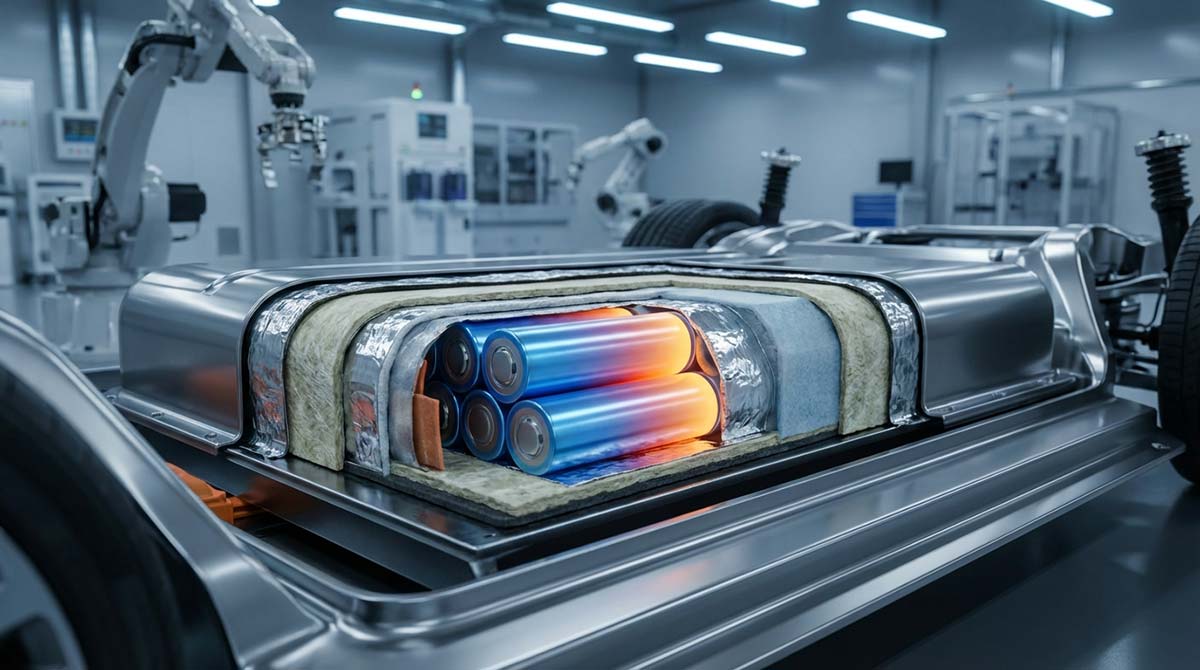
Electric vehicles rely on lithium-ion batteries for performance, but managing battery heat is one of the biggest engineering challenges in modern EV design. Studies show that excessive battery temperature can reduce battery life by up to 50 percent and significantly increase safety risks. EV battery insulation therefore plays a critical role in maintaining thermal stability inside battery packs and protecting cells.
Lithium-ion batteries operate within a narrow temperature window. Without effective EV battery thermal insulation, battery cells can lose stability, leading to performance degradation and potential safety risks.
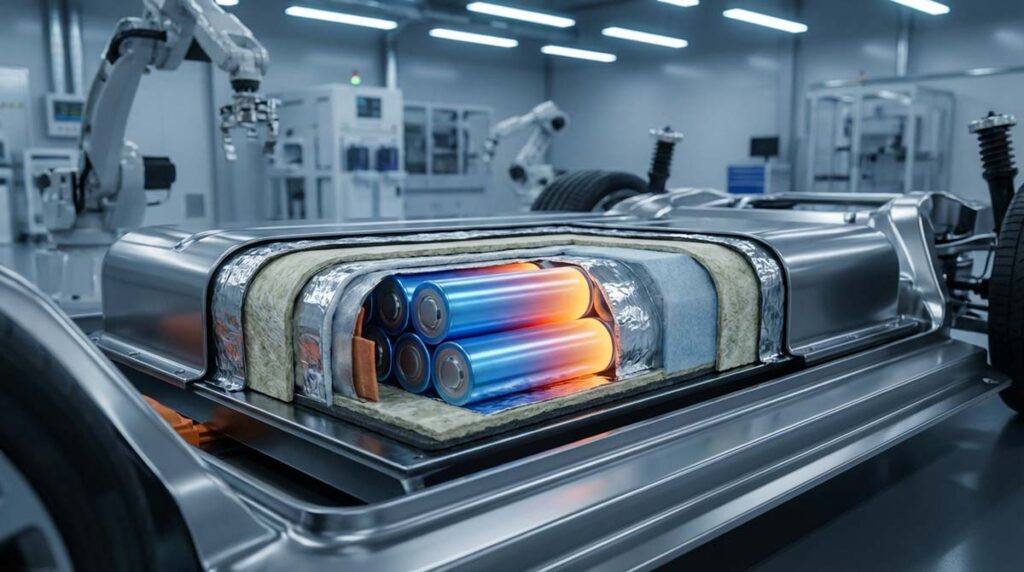
To manage these thermal conditions, EV manufacturers use specialized insulation materials that act as barriers to heat transfer inside battery packs. At PBM, decades of insulation engineering experience support the development of advanced thermal solutions designed for demanding EV battery applications. Materials such as aerogel battery insulation, glass wool battery insulation, and ceramic fibre battery insulation help control temperature fluctuations and improve overall battery reliability.
As EV adoption accelerates and battery systems become more powerful, selecting the right insulation material has become a key engineering decision. This article examines the differences to help manufacturers evaluate performance, safety, and cost considerations.
Why EV Battery Insulation Is Critical for EV Battery Safety
During the process of charging, discharging, and acceleration the electric vehicle batteries emit heat. These temperature changes may adversely affect the health and performance of the batteries without adequate insulation. Proper insulation is then a key ingredient of safe and efficient EV design.
What Is EV Battery Insulation?
EV battery insulation refers to specialized thermal materials used inside electric vehicle battery packs to control heat transfer, maintain safe operating temperatures, and reduce the risk of thermal runaway in lithium-ion battery systems.
Effects of Temperature on Battery Efficiency
Batteries that contain Lithium-ion are very sensitive to temperature. High temperature hastens the speed of chemical reactions inside the battery, thus decreasing battery life and increasing the rate of degradation. On the other hand, too low temperatures decrease the power production and decrease the rate of charging.
Adequate EV battery insulation is used to stabilize internal temperatures by reducing external heat transfer. Insulation materials can be used to maintain an ideal thermal environment and thereby make battery operation more efficient and allow them to have a longer life.
Battery Safety Insulation
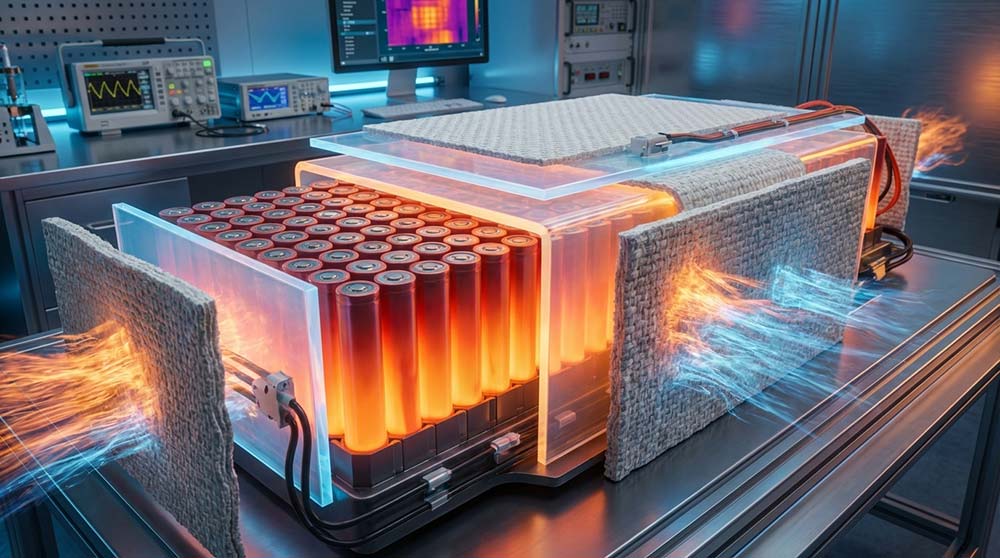
In addition to efficiency, insulation is also a major concern in safety. In severe cases, a chain reaction in a battery cell can be caused by overheating, which is called thermal runaway. Once this happens, heat is diffused very quickly among cells.
EV battery thermal insulation materials are advanced to delay the heat spread in the cells. Such delay enables battery management systems to spot abnormal temperature spikes and act on them before severe damage takes place.
In summary, properly planned insulation can play a significant role in managing the temperature of EV batteries, which will result in safer and more sustainable electric vehicles.
Aerogel Battery Insulation: Structure, Performance and Advantages
Aerogel is usually regarded as one of the most sophisticated insulation technologies that can be used to provide thermal protection.
Aerogel Structure and Thermal Performance
Aerogel is a very light substance that is made up of air which is captured in the structure of silica mostly in a solid state. This porous architecture has a significant negative impact on the heat transfer that provides aerogel with one of the lowest thermal conductivity indices among insulation materials.
These properties make aerogel battery insulation exceptionally thermal-resistant, having an extremely lightweight structure. These characteristics render it very appropriate to small EV battery packs in which space and weight are highly valued design factors.
Why is aerogel a good insulator in EV batteries?
Aerogel is very useful in that it has a nanoporous structure which entraps air, and it restricts heat. This low thermal conductivity is very low to stabilize temperatures of the batteries, enhance energy efficiency and it also eliminates chances of overheating in the electric car battery systems.
Aerogel is still not much cheaper than traditional insulation material despite its impressive performance. It is therefore commonly applied in high-performance EV models or applications whereby optimum thermal protection is needed.
Glass Wool Battery Insulation: Cost Advantages and Limitations
Glass wool is an insulation material popular in the construction and industrial industry. Glass wool battery insulation is a viable and cost-effective thermal solution in certain EV applications.
Manufacturing and Material Properties
Glass wool is made by melting glass and spinning it into very fine fibres which trap air into a light structure. This structure lowers the heat loss and provides a moderate performance insulation.
Major characteristics of glass wool are:
- Low cost of manufacture. Glass wool is also relatively cheap to manufacture hence, it is also a cost-effective choice of insulation on large-scale applications.
- Delicate fibrous tissue. The composite is not complicated to manipulate and incorporate into other industrial designs.
- Middle-range thermal resistance. Glass wool is not as effective as aerogel but it is still effective to do the insulation of moderate temperature conditions.
EV Battery Application Limitations
Although glass wool has cost benefits, glass wool also has some constraints relative to the electric vehicle battery systems:
- Less thermal efficiency than aerogel. It has inferior insulation performance at a higher temperature.
- Less strength in high temperatures. Increased thermal stress can have impacts on long term material performance.
- New layers of protection might be in demand. Its fibrous composition can require additional design considerations in its integration.
Even with these constraints, glass wool battery insulation is still a possibility to any EV manufacturer interested in an affordable approach to thermal management.
Ceramic Fibre Battery Insulation for High-Temperature Protection
High temperature industrial environments that use ceramic fibre insulation are typical. Ceramic fibre battery insulation has been a significant component in the safety of some EVs because of its capability in enduring very high temperatures.
Heat Resistance and Thermal Stability
The ceramic fibres are crafted using the alumina-silica compounds that are created to withstand extremely high temperatures. The structural stability of these fibres is also evident even in hostile thermal conditions and hence they may be considered to be applicable in those situations where heat containment is paramount.
This characteristic is useful in EV battery systems to avoid the propagation of intense heat during abnormal battery events. Ceramic fibre is thus involved in enhanced safety in extreme operating conditions.
EV Battery Insulation: Aerogel vs Glass Wool vs Ceramic Fibre
Ceramic fibre has various advantages over the aerogel and glass wool. It is also more resistant to extremely high temperatures than glass wool, and is not as thermal conductive as aerogel.
Furthermore, ceramic fibre insulation might be a little bit heavier, and it might need delicate engineering inclusion in small battery packs. However, it is durable and resistant to heat, so it can be used in sophisticated EV battery temperature control.
In general, ceramic fibre battery insulation is most suited in the application where a design requirement is high temperature tolerance.
Comparative Analysis of EV Battery Insulation Materials
Selecting the correct EV battery thermal insulation depends on several engineering factors. Different insulation materials offer distinct advantages depending on thermal performance, cost, and application requirements in EV battery systems
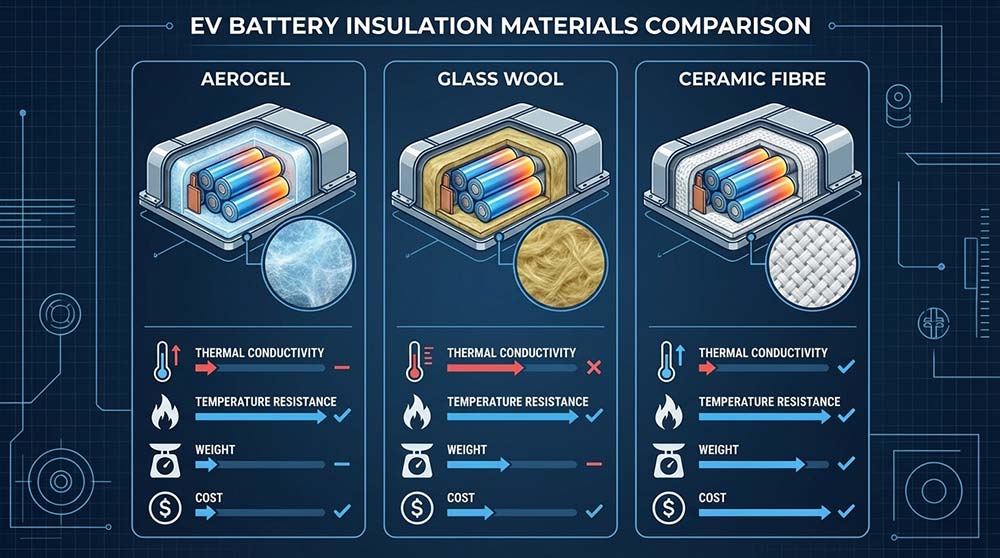
| Material | Thermal Conductivity | Temperature Resistance | Weight | Cost | Typical EV Application |
| Aerogel Battery Insulation | Extremely low | High | Ultra-light | High | Premium EV battery packs, high-performance electric vehicles |
| Glass Wool Battery Insulation | Moderate | Moderate | Light | Low | Cost-efficient EV battery modules and commercial vehicles |
| Ceramic Fibre Battery Insulation | Low | Very high | Medium | Medium | Thermal runaway protection and high-temperature EV battery zones |
The ultimate choice of optimal insulation of electric vehicle batteries is required to be based on several engineering priorities, including performance, safety, cost, and design flexibility.
- Thermal conductivity: Aerogel provides the lowest thermal conductivity, giving it better insulation performance than glass wool or ceramic fibre.
- Operating temperature: Ceramic fibre is most effective in very high temperature applications, whereas aerogel offers good performance over a wide temperature range.
- Mass: Aerogel is highly lightweight, which contributes to vehicle efficiency. Glass wool is a medium light weight and ceramic fibre a little heavier.
- Cost efficiency: Glass wool is the cheapest to purchase; it is applicable in cost-sensitive EV designs. The most expensive yet the best performing in terms of performance is aerogel.
- Application suitability: Premium EVs are frequently insulated with aerogel, commercial EVs can be aided with ceramic fibre as a safety measure, and cost-conscious EVs can use solutions based on glass wool.
Therefore, there are no fixed insulation materials in every segment of EV based on its performance expectations and cost constraints.
Conclusion
With the development of electric vehicle technology, better EV battery insulation is becoming more popular as a means to ensure safety, efficiency, and battery longevity. Correct insulation maintains consistent temperature in the stables and minimizes the hazards of overheating.
Aerogel battery insulation is one of the materials, which is most likely to be most effective in terms of thermal efficiency and weight. Glass wool battery insulation is a cost-efficient solution in the case of moderate temperature, and ceramic fibre battery insulation is an excellent solution in case of high-temperature condition.
Finally, the insulation material is selected based on the nature of the EV application, the objectives of performance requirements and budget. With an appropriate choice of thermal insulation materials to be used in EV batteries, the manufacturers will be able to make great improvements regarding the battery life and the general reliability of electric vehicles.
Ready to Future-Proof Your Product with Insulation That Performs?
At PBM Insulations, we engineer thermal and acoustic solutions that power India’s leading OEMs. Whether you’re building the next electric vehicle, optimizing industrial machinery, or looking to enhance sustainability — we’re here to co-create with precision, trust, and performance.
Let’s turn your insulation challenges into engineered solutions.
📩 Reach out for a custom consultation
🌐 Visit us at: www.pbminsulations.com
📞 Call us: +91-7310777959
🔗 Connect with us: LinkedIn | YouTube | Instagram
Join our network for monthly insights on insulation innovation, EV breakthroughs, and industry trends. Subscribe to PBM Insulation Insights today.
“Crafting Quiet Strength Since 1993” | An IATF, ISO & Ecovadis Certified Company | Your OEM Partner in Thermal & Acoustic Innovation