
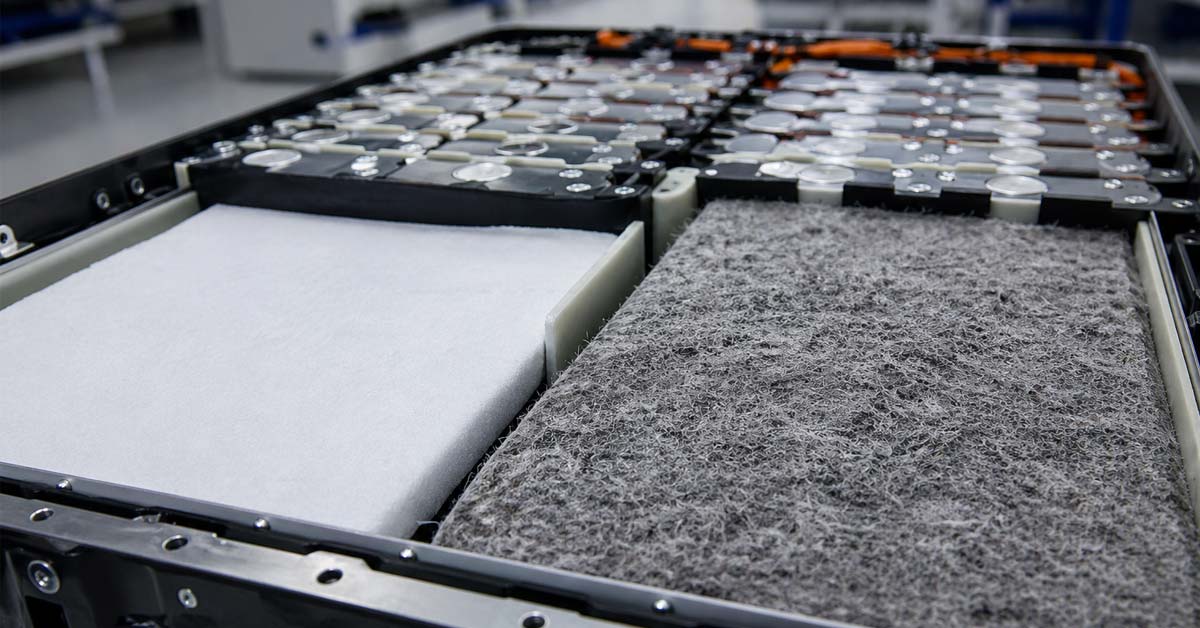
Material selection for EV battery thermal containment is rarely as clean as it looks on paper. When evaluating aerogel battery insulation, engineers quickly realise the decision is not just about thermal resistance, but how materials behave inside real EV battery insulation systems under stress. In real projects, engineers end up juggling thermal resistance, thickness, weight, and how the material actually fits into the design. The priorities don’t always align, especially across different battery architectures and EV battery thermal management requirements.
At PBM Insulations, we see this play out regularly. We work with OEMs and battery manufacturers on these decisions, and since we produce both Aerogel and Pyro Thin Mat under IATF 16949 systems, we’re not just looking at lab data. We’re looking at how these materials behave in production and during integration.
The challenge is that most comparisons out there don’t go that far. They tend to stay at a lab level, which is useful, but only to a point. It doesn’t fully answer what happens at the pack level or during an actual thermal runaway containment event.
So instead of repeating the usual data points, this blog looks at Aerogel vs Pyro Thin Mat EV battery applications from a practical angle. The focus is on performance, structural behavior, and where each material tends to make more sense.
What EV Thermal Runaway Containment Demands at Scale
At a smaller scale, many materials meet basic thermal requirements. But in real EV battery systems, expectations shift. It’s not just about insulation, but how the material behaves inside the actual pack. This is where material-level decisions directly impact EV battery insulation performance and safety outcomes
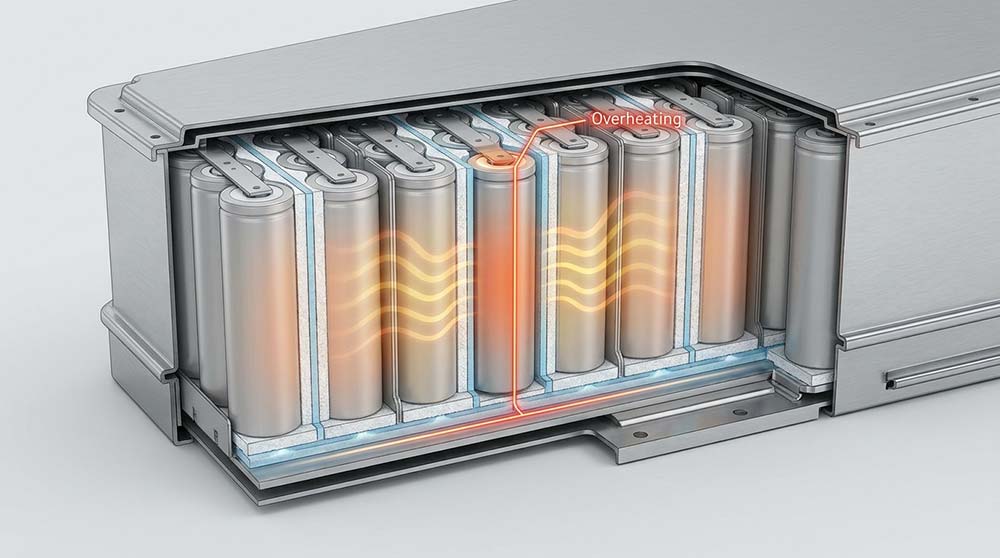
EV thermal runaway containment refers to the ability of an insulation system to limit heat propagation within a battery pack during a failure event. It focuses on delaying temperature spread, protecting adjacent cells, and maintaining structural integrity long enough to prevent cascading failure across the system.
Thermal Resistance vs Containment Time
Thermal resistance is often the first metric engineers look at. It gives a quick idea of how well a material slows heat transfer. But in thermal runaway scenarios, that alone is not enough. This is a critical factor in EV battery thermal management, where delays in heat propagation define containment success.
Containment time becomes more relevant. The focus shifts to how long the material can delay heat from spreading to nearby cells. Even a short delay can influence how the event progresses.
Another factor is performance under sustained heat. Some materials lose effectiveness over time. So stability at the time of exposure matters as much as the initial resistance.
Thickness, Weight, and Packaging Constraints
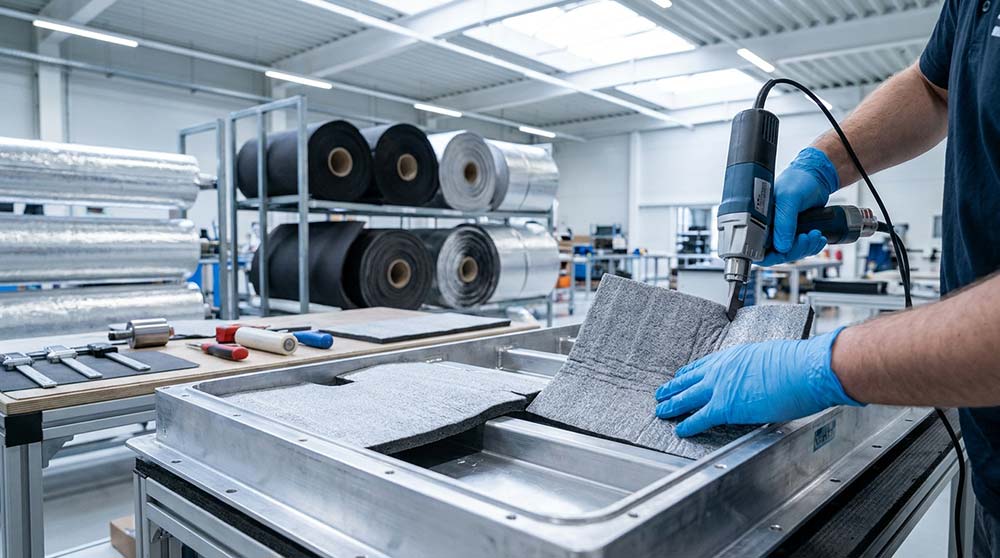
Increasing thickness can improve insulation, but space is always limited. Battery packs are designed around tight constraints, so every layer has an impact. Weight is also a consideration. Even small additions can affect overall performance at scale. This makes material selection less straightforward than it seems.
Packaging adds another layer of complexity. Materials must fit into compact designs without creating integration challenges. In some cases, a better fit can matter as much as thermal performance. These trade-offs directly influence how aerogel battery insulation or alternative materials are selected for compact EV battery designs
At scale, containment is not defined by one parameter. It depends on how thermal performance, space, and integration come together in the final design.
Aerogel vs. Pyro Thin Mat – Performance Comparison
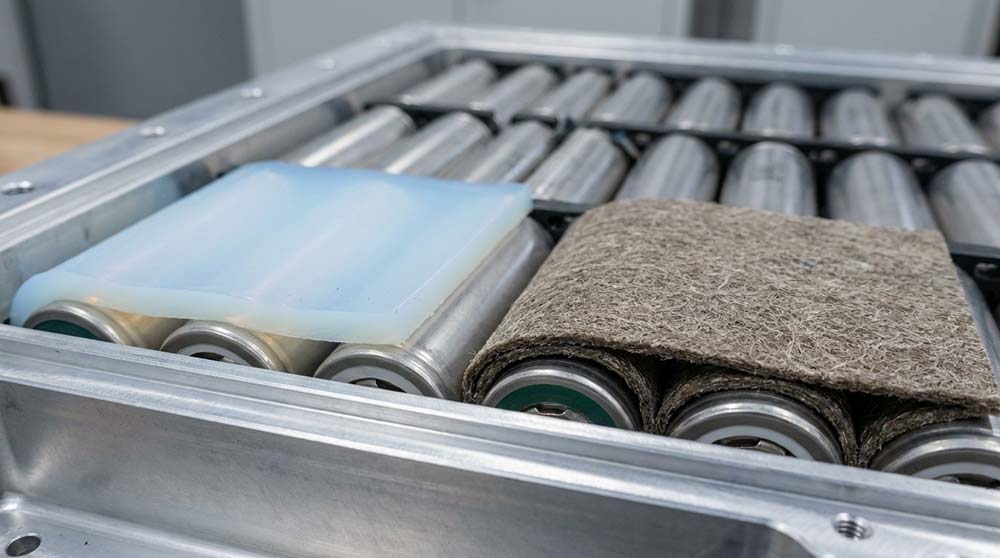
If you’re comparing Aerogel vs Pyro Thin Mat EV battery applications, standard insulation values only tell part of the story. What really matters is how each material behaves under sustained thermal stress.
This is especially relevant when selecting aerogel battery insulation for high-performance EV battery insulation systems.
Aerogel – Thermal Performance and Limitations
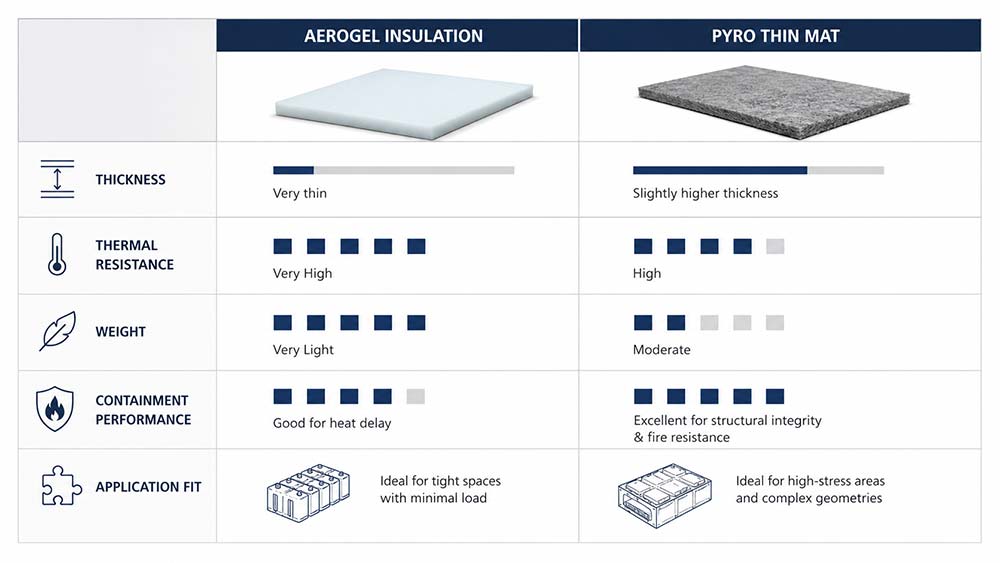
Aerogel frequently pops up as the initial choice due to its low level of thermal conductivity. Simply put, it has an ability to block thermal flow, which is important for specific components of the battery system. This makes aerogel battery insulation a strong candidate in EV battery thermal management where space and efficiency are critical.
But that’s not the full picture. In containment scenarios, the material also needs to hold up under high temperatures for a period of time. This is where Aerogel can be a bit more sensitive. It is inherently brittle, so handling and integration need more attention, especially in designs where there is compression or mechanical load.
However, the issue of consistency cannot be overlooked when you start scaling up. Aerogel certainly shows its strength when you test it in a laboratory setting. However, once you start scaling up, consistency becomes more about controlling the process and incorporating the material itself into the system.
Ideal Use Cases for Aerogel
The use of aerogel would generally be more applicable to systems where space is restricted and thermal insulation is of key importance. The material can be effectively applied in places with minimal mechanical loads, thus utilizing its insulation properties without complicating the integration process. Such applications are typical in EV battery insulation layers where minimal thickness and high thermal resistance are required.
While it is true that Aerogel is an excellent insulator, its practical application will depend heavily on the context of use. Integration and operating conditions play a bigger role than the numbers alone suggest.
Application Fit – Battery Architecture and Design Needs
In EV battery systems, material selection rarely sits on its own. It usually ties back to the architecture, and small design changes can shift how a material behaves.
Pyro Thin Mat – Structural and Fire Resistance Advantages
Pyro Thin Mat usually comes into the picture when structural stability becomes a concern. Thermal performance matters, of course, but in many cases, the bigger issue is how the material holds up under stress. This structural reliability becomes critical in thermal runaway containment scenarios where material integrity defines propagation control.
In tightly packed battery modules, things don’t stay ideal for long. Materials see a mix of vibration, compression, and heat, often at the same time. Under those conditions, a material that keeps its shape tends to behave more predictably. That predictability is what makes a difference during containment.
From a fire resistance standpoint, Pyro Thin Mat is designed to take direct exposure without failing too quickly. It doesn’t mean it is immune, but it does buy time. And in containment scenarios, even a short delay can matter more than expected.
Ideal Use Cases for Pyro Thin Mat
In most cases, Pyro Thin Mat fits better in designs with tighter layouts or more complex geometries. It also makes sense where mechanical durability is not just preferred, but required.
So the decision often comes down to behavior inside the actual battery structure. Test data gives direction, but real conditions tend to tell the full story.
What Procurement Must Verify Before Material Selection
For procurement teams, performance data is only part of the picture. For EV battery insulation programs, these checks directly influence long-term EV battery thermal management performance and supply reliability. What usually matters more is whether that performance holds up once production begins.
- Thermal Performance Validation. Lab results are useful, but they don’t always reflect real conditions. Checking performance at the pack level gives a clearer idea of how the material will actually behave.
- Manufacturing Uniformity. Uniformity is quite obvious, but it can easily become a problem when production moves to larger scales. Even small differences in thickness and density could result in different performance levels.
- Availability– is another aspect that may become a problem after it’s already too late. It helps to know early on whether the material can be delivered consistently at required volumes.
- Integration Capability. Some materials look good on paper but are harder to work with. However, any additional processes or modifications that are needed for the integration could slow down the process even further than anticipated.
- Compliance and Certification. IATF 16949 certification suggests that everything is in order. However, it does not ensure performance, but only adds to the level of assurance.
In the end, material selection is rarely about one factor. It usually comes down to how well everything fits together once the program moves forward.
Conclusion
Material selection for EV battery thermal containment is rarely about finding a single better option. In most cases, it comes down to how well a material fits within the design and what trade-offs are acceptable.
When you look at Aerogel vs Pyro Thin Mat EV battery applications, the differences are clearer in context. Aerogel works well where space is limited and thermal resistance is a priority. Pyro Thin Mat tends to hold up better in environments where structural stability matters more.
What usually happens in practice is that the decision evolves with the design. Early assumptions change once integration begins, and that’s where the differences between materials become more visible.
If you’re working through this decision, it often helps to look at both materials in context. Selecting the right aerogel battery insulation or alternative depends on how it performs within your EV battery insulation design and EV battery thermal management requirements. You can reach out to PBM Insulations to discuss what might fit your design and production requirements.