
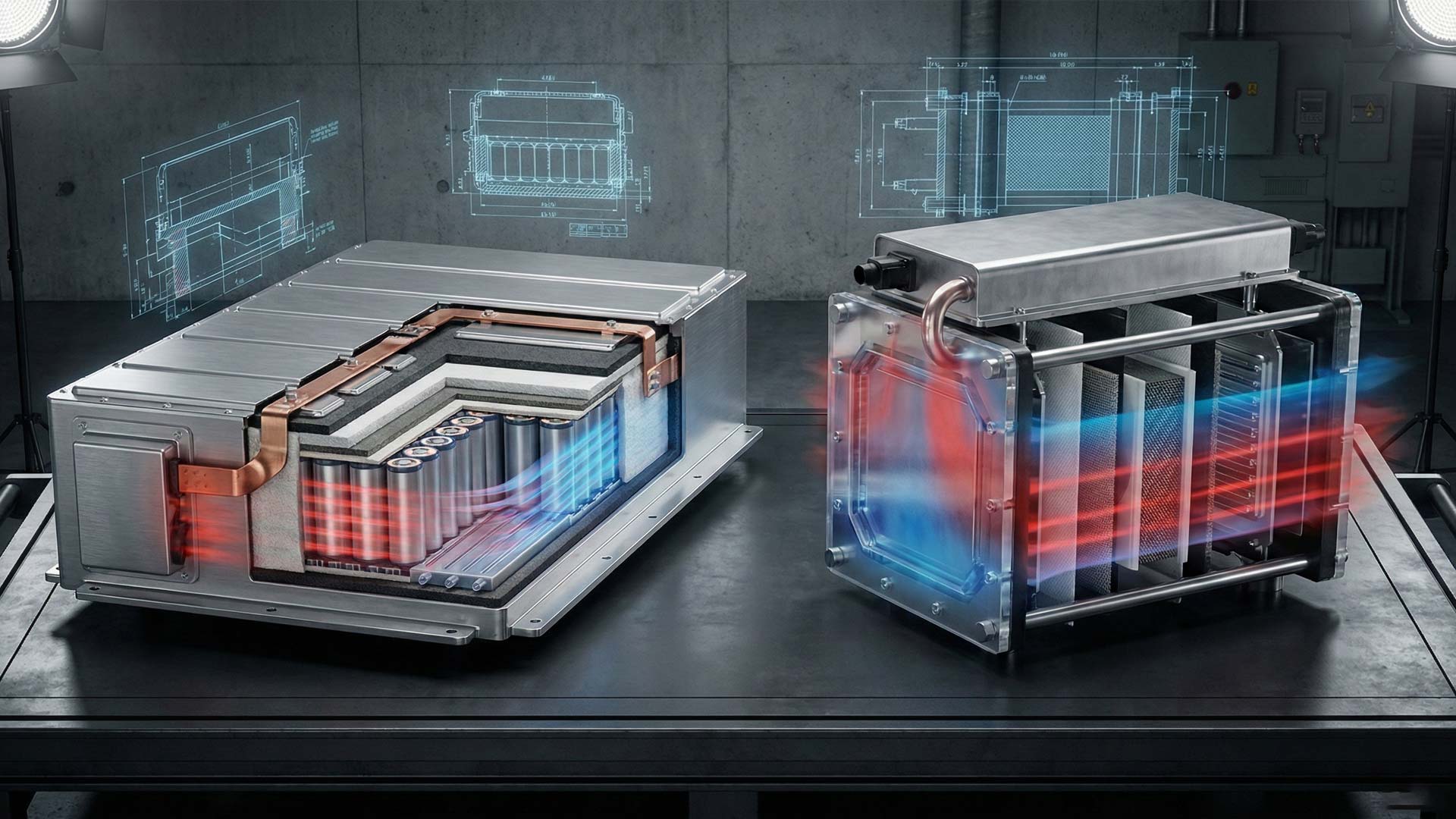
Thermal performance is becoming the defining challenge in modern electric and hydrogen mobility. As battery packs grow in density and fuel cell systems push for higher efficiency, heat has emerged as the most persistent barrier to safety, reliability, and long-term performance. In this rapidly changing landscape, thermal engineering is no longer a supporting function. It is the foundation that determines how safely and efficiently the next decade of mobility will operate.
Across OEM programs, engineers face a similar pattern. Battery temperatures rise unevenly during fast charging. Fuel cell stacks develop hotspots that affect membrane health. Hydrogen tanks experience steep gradients between the dome and the boss section. All of these require insulation that is lightweight, predictable, and validated. This has created a sharp rise in the demand for EV insulation, battery safety solutions, and dependable fuel cell protection.
Hybrid EV hydrogen platforms are already emerging in global markets, and each depends on stable thermal control to reach commercial viability. This article explores how thermal engineering shapes these systems, the materials that influence performance, and the role PBM plays in creating reliable insulation for next generation mobility.
Heat Challenges in EV Batteries and Hydrogen Systems
Managing heat has become one of the most important engineering priorities for new vehicle platforms. As battery capacities increase and hydrogen systems mature, thermal stress influences safety, usable range, and overall operating life.
Temperature Stress in High Voltage Batteries
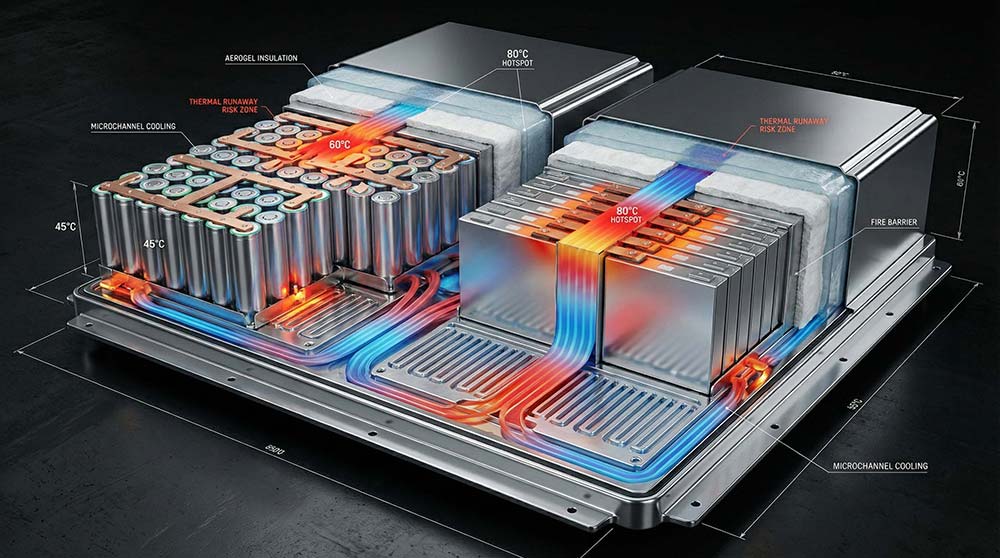
Lithium ion cells rarely heat uniformly. Some modules warm faster than others during acceleration or fast charging. When one cell overheats and transfers heat to its neighbour, the risk of thermal propagation increases. This makes cell to cell fire barriers essential for slowing heat transfer inside the pack. Thermal runaway prevention depends on insulation layers that resist heat flow and maintain structural stability even under sudden temperature spikes.
EV insulation now plays a central role in achieving battery safety compliance. Without predictable insulation performance, even the most advanced battery management software cannot prevent localised heating. High voltage systems need materials that can tolerate both rapid heat rise and prolonged load cycles.
Heat Concentration Zones in Fuel Cell Platforms
Hydrogen systems face a different set of challenges. Fuel cell stacks operate at elevated temperatures, and repeated cycling can create hotspots around the membrane and bipolar plates. Hydrogen tanks also develop thermal gradients during refuelling. The dome area experiences the highest thermal load, while the boss region remains structurally sensitive.
Effective fuel cell protection requires consistent high temperature insulation that shields sensitive components without adding unnecessary weight. Materials must handle both steady state temperatures and occasional bursts during load transitions.
Materials That Influence Safety, Range, and Thermal Stability
The choice of insulation material often determines how well an EV or hydrogen system manages heat. Different zones demand different behaviours, and selecting the right material influences both safety and energy efficiency.
Comparing Key Insulation Materials
Insulation materials must combine low thermal conductivity with mechanical stability. They also need to maintain shape and performance at extreme temperatures.
- Aerogel insulation is ideal when thin, lightweight barriers are needed. It offers very low thermal conductivity and supports compact battery designs.
- Ceramic fibre insulation withstands high temperatures around hydrogen stacks and exhaust zones. It remains dimensionally stable even under continuous heat exposure.
- Lightweight glass fibre mats balance heat containment with flexibility and are suitable for microchannel airflow design inside EV battery enclosures.

Each material serves a distinct purpose. Aerogels suit tight enclosures, ceramic fibre supports extreme zones, and engineered mats help distribute airflow for better thermal balance.
Lightweight Design and Its Impact on Mobility
Weight reduction continues to shape mobility engineering. Every gram saved contributes to better range and lower energy consumption. Insulation materials that deliver high thermal performance at reduced thickness directly improve the efficiency of hybrid EV hydrogen systems.
Microchannel airflow design also benefits from lighter insulation layers. These designs help move heat away from hotspots and ensure smooth airflow around components, contributing to stable temperature profiles during demanding driving conditions.
Digital Tools That Shape Thermal Engineering Decisions
Modern insulation design begins long before manufacturing. Digital modelling enables engineers to test concepts, evaluate thermal paths, and optimise fitment before a physical prototype is produced.
SolidWorks Modelling for Fitment and Airflow
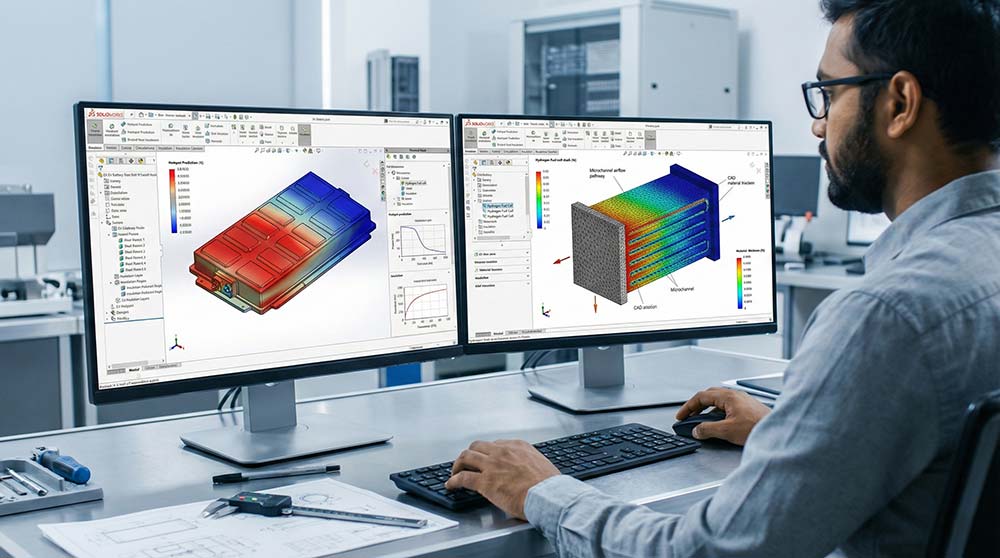
SolidWorks helps visualise real world operating conditions. Engineers can predict where heat will concentrate, how air moves around the enclosure, and where insulation must be placed to prevent stress points. This modelling ensures that insulation fits accurately around complex EV geometries without interfering with structural features.
Prolog and Thermal Simulation for Heat Flow
Thermal simulation tools such as Prolog allow engineers to replicate extreme environments. They can understand how materials behave when exposed to battery and fuel cell temperatures and identify where insulation thickness needs adjustment. Digital models help avoid redesign cycles and shorten development timelines for OEM programs.
Validating Material Performance Before OEM Deployment
Thermal engineering does not end at simulation. Materials must be tested until they prove their behaviour under operating conditions. This ensures reliability for EV and hydrogen applications in the field.
High Temperature and LOI Testing
Insulation materials undergo muffle furnace testing to assess performance under sustained high temperatures. Shrinkage and surface changes are monitored to confirm long term stability. Limiting oxygen index testing provides insights into flammability behaviour. Materials with higher LOI values require more oxygen to ignite and are safer for use in EV battery packs and hydrogen cell enclosures.
This combination of heat and flammability testing helps determine if a material can contain heat long enough to slow fire propagation or prevent thermal runaway from spreading across a pack.
Dielectric Strength for High Voltage EV Safety
Insulation in electric vehicles must also protect against electrical leakage. High voltage systems require materials that maintain dielectric strength even under vibration, heat, and cycling. Glass fibre mats and specialty insulation layers prevent current from escaping and support the safety requirements of modern power electronics and hydrogen control systems.
Why OEMs Rely on PBM for EV and Hydrogen Thermal Solutions
OEMs evaluate insulation suppliers based on performance, consistency, and engineering collaboration. PBM supports these expectations with materials, testing capability, and a design process built around reliability.
Material Portfolio for EV and Fuel Cell Platforms
PBM offers a wide range of insulation products tailored for mobility systems. Aerogel sheets protect battery packs without adding bulk. Flexible mats shape airflow inside enclosures. Ceramic fibre blankets support hydrogen stack temperatures. Each material is developed for predictable performance and durability.
Engineering Support From Concept to RFQ
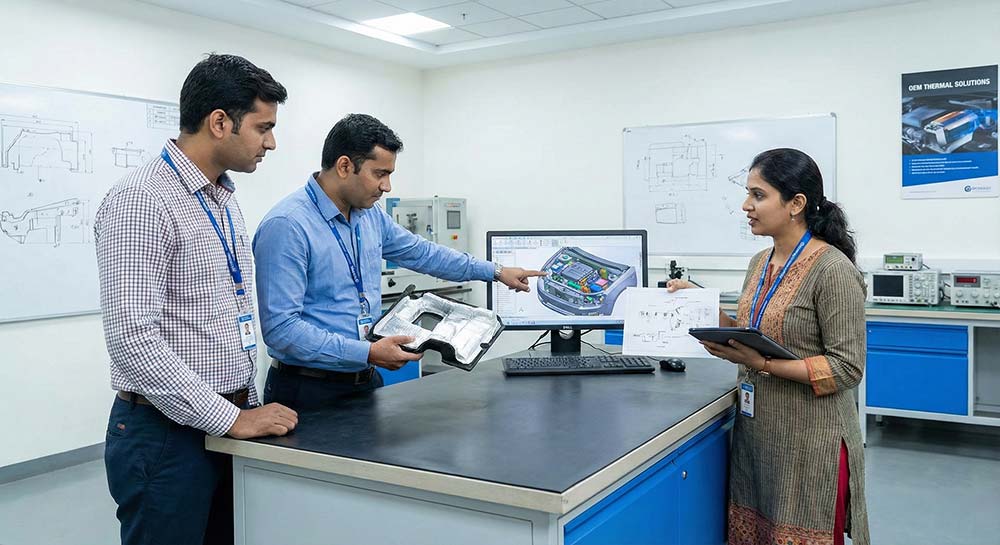
PBM works closely with OEM engineering teams during concept development. Simulation support and in house testing help speed up prototyping and remove uncertainty from insulation selection. A zero defect mindset ensures stable production and reliable batch quality. For long term EV and hydrogen programs, this combination of engineering insight and process discipline creates dependable value.
Conclusion
Thermal engineering is now central to the safety and performance of electric and hydrogen vehicles. As mobility systems evolve, insulation materials, digital modelling, and lab validation form the backbone of reliable battery and fuel cell operation. PBM supports this shift with engineered materials, proven testing capabilities, and a commitment to deliver stable performance across EV insulation and fuel cell protection applications. For OEMs building next generation platforms, PBM provides a dependable path from early concept to full scale production.
If you would like to explore insulation solutions tailored to your EV or hydrogen program, PBM is ready to collaborate.
Ready to Future-Proof Your Product with Insulation That Performs?
At PBM Insulations, we engineer thermal and acoustic solutions that power India’s leading OEMs. Whether you’re building the next electric vehicle, optimizing industrial machinery, or looking to enhance sustainability — we’re here to co-create with precision, trust, and performance.
Let’s turn your insulation challenges into engineered solutions.
📩 Reach out for a custom consultation
🌐 Visit us at: www.pbminsulations.com
📞 Call us: +91-7310777959
🔗 Connect with us: LinkedIn | YouTube | Instagram
Join our network for monthly insights on insulation innovation, EV breakthroughs, and industry trends. Subscribe to PBM Insulation Insights today.
“Crafting Quiet Strength Since 1993” | An IATF, ISO & Ecovadis Certified Company | Your OEM Partner in Thermal & Acoustic Innovation