
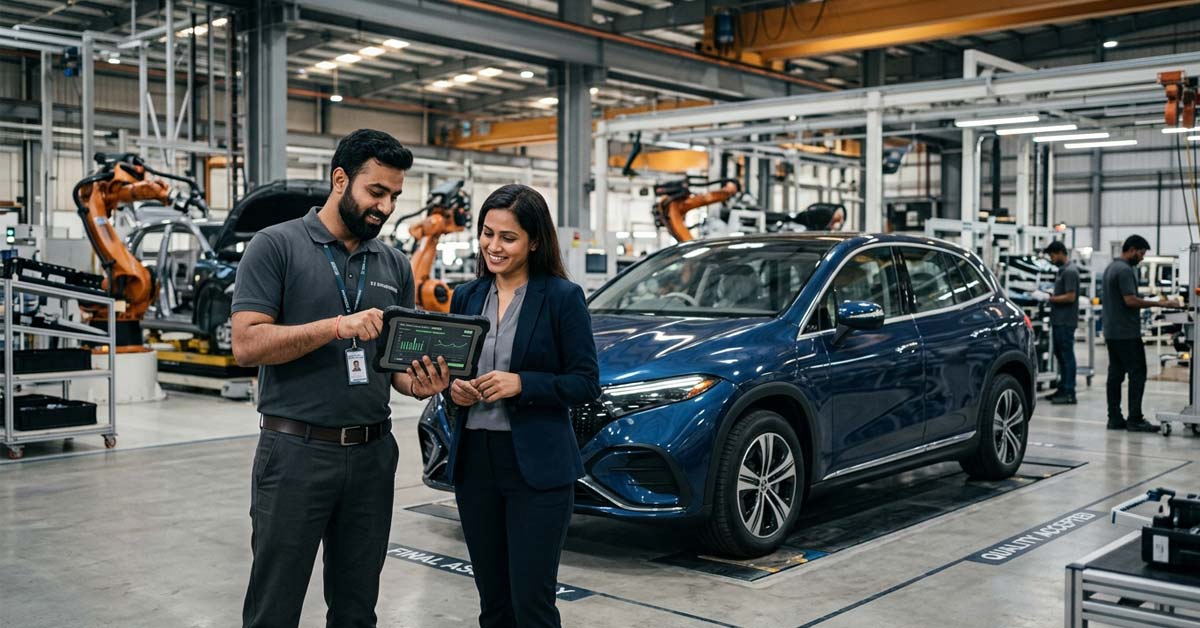
Electric vehicles have transformed the driving experience by removing the constant sound of internal combustion engines. While this creates quieter cabins, it also exposes high-frequency motor whine, tyre interaction, and subtle vibrations once hidden beneath engine noise. EV Acoustic Insulation has become essential for achieving refined cabin comfort and superior Electric Vehicle NVH performance.
At PBM, we bring more than 30 years of insulation manufacturing experience supported by IATF 16949 manufacturing systems, in-house validation capabilities, and engineering expertise in EV acoustic insulation. We collaborate for OEM partnerships.
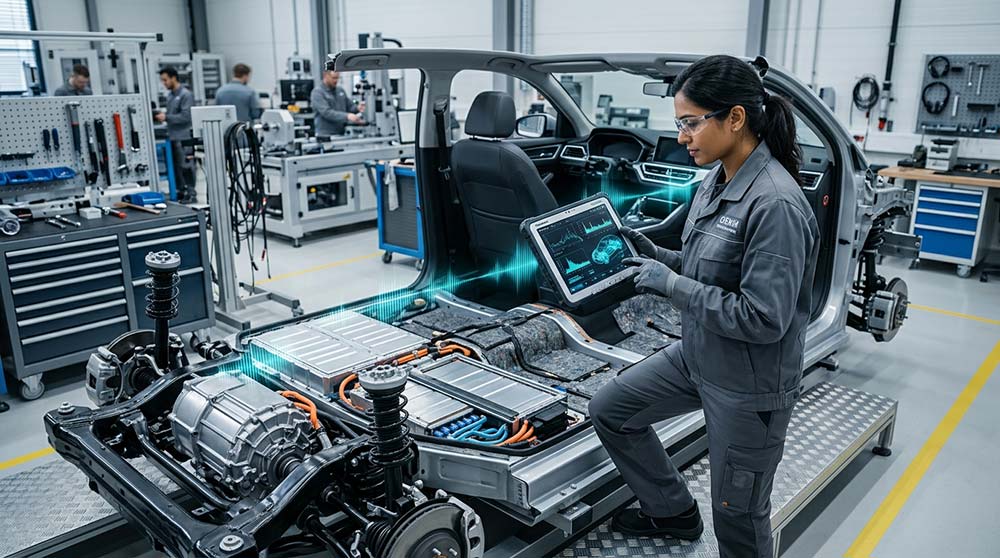
Too often, acoustic performance receives focused attention only during validation testing. By then, material changes become expensive, packaging flexibility decreases, increasing programme risk and delaying production readiness. Early engineering improves validation confidence.
We believe export ready insulation for EV acoustic begins with materials that control motor noise, road inputs, and structure-borne vibration effectively. Synthalon Felt and Hybrid Mats support quieter electric vehicles with scalable manufacturing consistency.
EV Acoustic Insulation for Modern EV Platforms
Electric mobility has changed the way engineers approach cabin acoustics. Instead of masking unwanted sounds, modern electric vehicles require EV Acoustic Insulation that manages high-frequency noise and structure-borne vibration throughout the vehicle architecture. As Electric Vehicle NVH requirements continue to evolve, insulation materials play an increasingly important role in achieving quieter cabins, smoother validation, and consistent production performance.
EV Acoustic Insulation helps reduce motor noise, structure-borne vibration, and unwanted cabin sound in electric vehicles. By integrating insulation materials during the early design stages, OEMs can improve Electric Vehicle NVH performance, support smoother validation, and achieve consistent acoustic performance across production programmes.
New Noise Sources in Electric Powertrains
Unlike conventional vehicles, battery electric platforms operate without the continuous combustion sounds that traditionally dominated cabin acoustics. The quietness of electric propulsion makes motor noise, tyre interaction, aerodynamic airflow, and road surface variations far more noticeable during everyday driving. Electric motors, power electronics, gear reduction systems, and inverters generate distinctive tonal frequencies that require effective EV acoustic insulation to maintain refined cabin acoustics.
Passenger Expectations Continue to Evolve
Quiet cabins have become an important expectation across modern electric vehicles. As a result, Electric Vehicle NVH performance has become a defining engineering objective throughout vehicle development. Addressing motor noise reduction and structure-borne vibration during the early design stages enables OEMs to optimise acoustic performance while supporting efficient validation and production readiness.
Understanding these evolving acoustic challenges allows manufacturers to integrate EV acoustic insulation more effectively throughout vehicle development. Early engineering decisions help improve cabin refinement, support predictable validation outcomes, and contribute to consistent acoustic performance across production programmes.
EV Acoustic Insulation Challenges in Electric Vehicles
Electric vehicles have changed the way engineers approach cabin acoustics. Without the masking effect of combustion engines, high-frequency motor whine, tyre interaction, and structure-borne vibration become more noticeable. As a result, EV Acoustic Insulation has become essential for improving Electric Vehicle NVH performance, enhancing cabin refinement, and supporting quieter battery electric vehicles.
New Noise Sources in Electric Powertrains
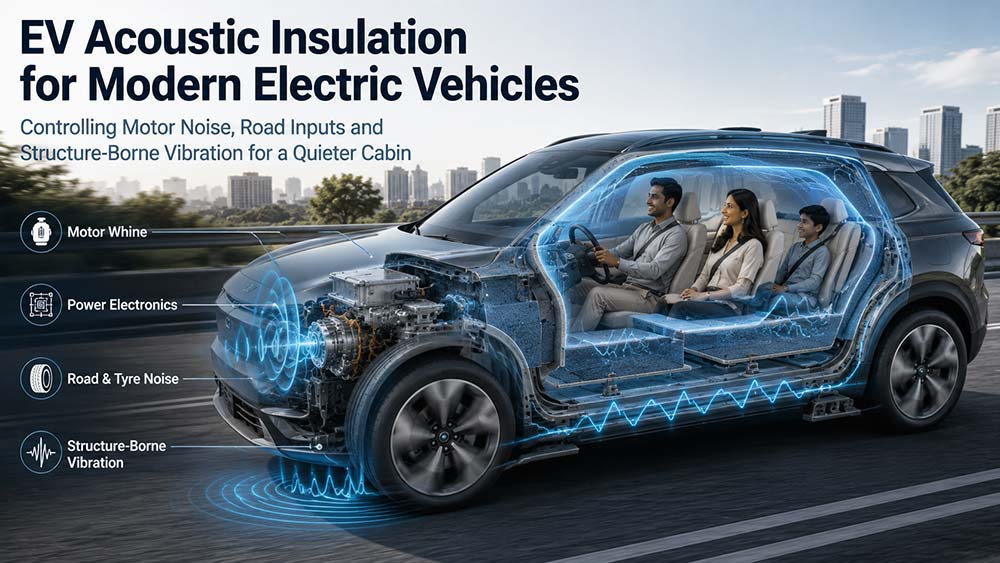
Battery electric vehicles produce acoustic characteristics that differ significantly from conventional vehicles. Electric motors, power electronics, and vehicle dynamics generate sound frequencies that require effective EV acoustic insulation throughout the vehicle architecture.
- Motor Whine: Electric motors generate high-frequency tonal sounds that become more noticeable during acceleration and regenerative braking.
- Power Electronics: Inverters, gear reduction systems, and electric drive components contribute to distinctive tonal frequencies inside the cabin.
- Road and Tyre Noise: Tyre interaction, aerodynamic airflow, and road surface variations become more prominent without continuous engine noise.
Early EV Acoustic Insulation Integration
Effective EV Acoustic Insulation cannot be treated as a final-stage correction. Early material selection supports better vehicle integration, improves validation outcomes, and enables consistent acoustic performance throughout vehicle development.
- Material Selection: Influences packaging, weight distribution, component integration, and long-term acoustic performance.
- Early Engineering: Reduces costly design changes while improving validation confidence and manufacturing readiness.
- Consistent Performance: Supports repeatable acoustic performance from prototype evaluation through production-scale validation.
Integrating EV Acoustic Insulation from the earliest stages of vehicle development enables manufacturers to improve Electric Vehicle NVH performance, minimise validation challenges, and achieve consistent acoustic performance across battery electric vehicle production programmes.
EV Acoustic Insulation for Modern Electric Vehicles
Electric vehicles have redefined cabin acoustics by eliminating the masking effect of combustion engines. High-frequency motor noise, tyre interaction, and structure-borne vibration have become more noticeable, making EV Acoustic Insulation essential for improving Electric Vehicle NVH performance, passenger comfort, and consistent acoustic performance throughout vehicle development.
EV Acoustic Challenges in Electric Powertrains
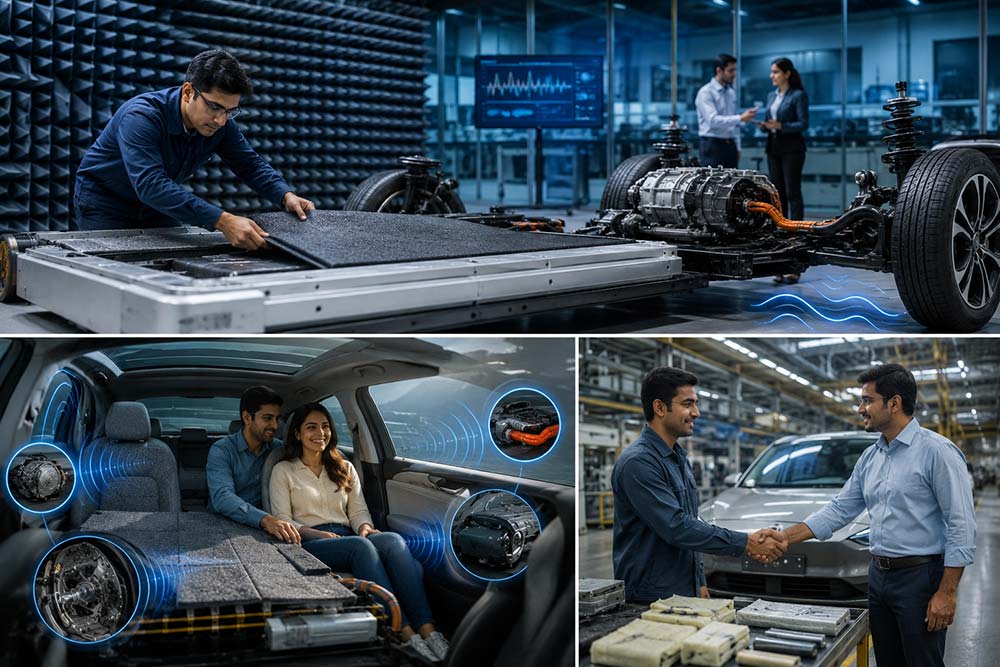
Battery electric vehicles generate acoustic characteristics that differ from conventional vehicles. Electric motors, inverters, gear reduction systems, and road inputs create new noise frequencies that require carefully engineered EV Acoustic Insulation solutions to achieve quieter cabins and improved Electric Vehicle NVH performance.
What Makes EV Acoustic Insulation Different from Conventional Vehicle Insulation?
Unlike conventional vehicles, electric vehicles operate without continuous engine noise to mask unwanted sounds. This makes motor whine, tyre interaction, aerodynamic airflow, and structure-borne vibration more noticeable. EV Acoustic Insulation is therefore engineered to control these acoustic challenges while supporting quieter cabins, improved Electric Vehicle NVH performance, and consistent validation outcomes.
Understanding these acoustic characteristics allows OEMs to integrate EV Acoustic Insulation more effectively during vehicle development. Early engineering decisions support improved cabin refinement, predictable validation outcomes, and consistent acoustic performance across battery electric vehicle production programmes.
EV Acoustic Insulation for Modern Electric Vehicles
Electric vehicles have changed the way engineers approach cabin acoustics. Without the masking effect of combustion engines, high-frequency motor noise, tyre interaction, and structure-borne vibration become more noticeable inside the cabin. As a result, EV Acoustic Insulation has become an essential part of Electric Vehicle NVH engineering.
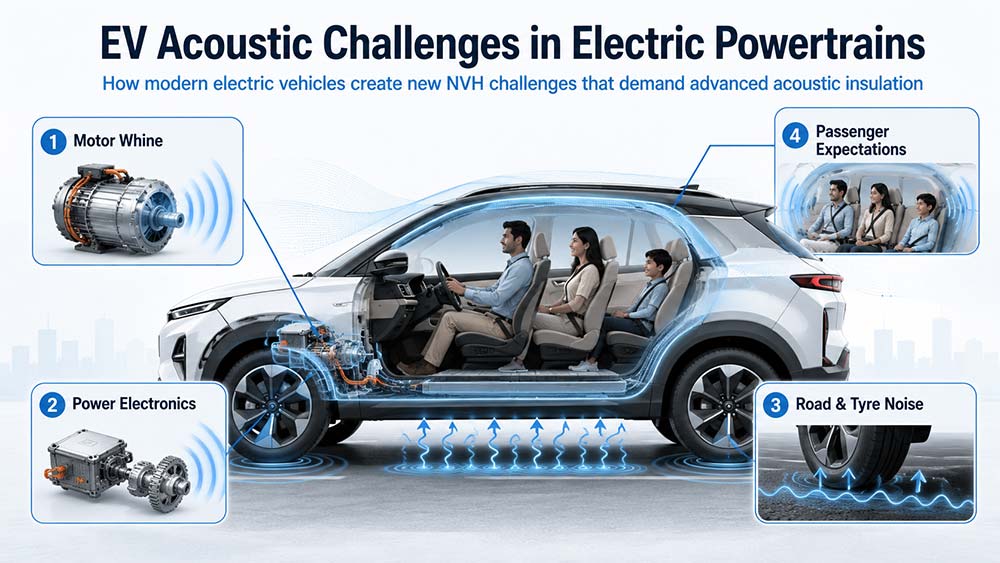
- Motor Whine: Electric motors generate high-frequency tonal sounds that become more noticeable during acceleration and regenerative braking.
- Power Electronics: Inverters and gear reduction systems produce distinctive frequencies that influence overall cabin acoustics.
- Road and Tyre Noise: Tyre interaction, aerodynamic airflow, and varying road surfaces contribute significantly to cabin noise.
- Passenger Expectations: Quieter cabins have made Electric Vehicle NVH performance an important engineering objective across modern EV platforms.
Understanding these evolving acoustic challenges enables OEMs to integrate EV Acoustic Insulation more effectively from the earliest design stages. Early material selection supports better vehicle integration, reduces validation challenges, and helps deliver consistent acoustic performance from prototype evaluation through production-scale manufacturing.
Conclusion
Electric vehicles demand more than powerful drivetrains. They require engineered EV Acoustic Insulation that controls motor noise, structure-borne vibration, and evolving Electric Vehicle NVH challenges from the earliest stages of vehicle development.
By integrating the right insulation materials during design, OEMs can improve cabin refinement, reduce validation challenges, and achieve consistent acoustic performance from prototype evaluation through Start of Production. Early engineering decisions create stronger production outcomes.
At PBM, our Synthalon Felt, Hybrid Mats, application engineering expertise, and IATF 16949 manufacturing systems help manufacturers develop quieter battery electric vehicles with dependable, production-ready insulation solutions.
Planning your next EV platform? Connect with PBM to develop customised EV Acoustic Insulation solutions engineered for validation success, manufacturing consistency, and scalable OEM production.