
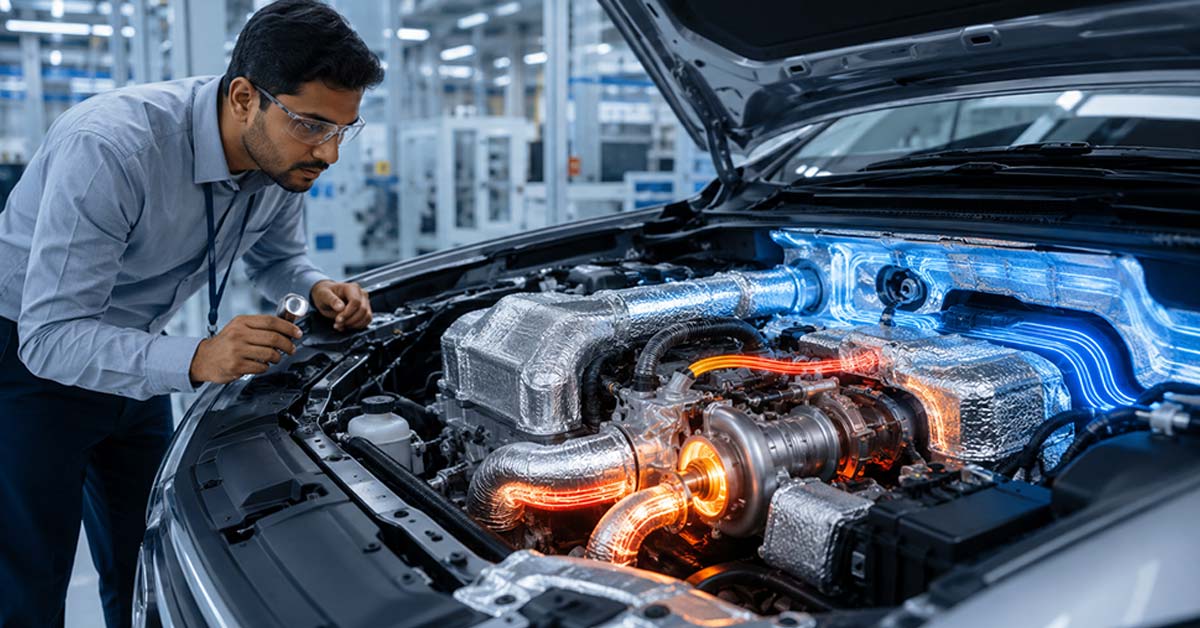
Modern vehicles generate more heat than ever before. Downsized engines, turbochargers, advanced emission systems, and increasingly compact vehicle architectures are placing temperature-sensitive components closer to high-heat zones. As a result, automotive engineers are increasingly relying on Flexible Heat Shields to improve Automotive Thermal Management and protect critical systems from rising thermal loads.
At PBM Insulations, we have spent more than 30 years supporting OEM qualification, production consistency, and long-term supply reliability. Our experience across passenger vehicles, commercial vehicles, and emerging mobility platforms has reinforced the importance of consistent thermal protection throughout a vehicle’s lifecycle.
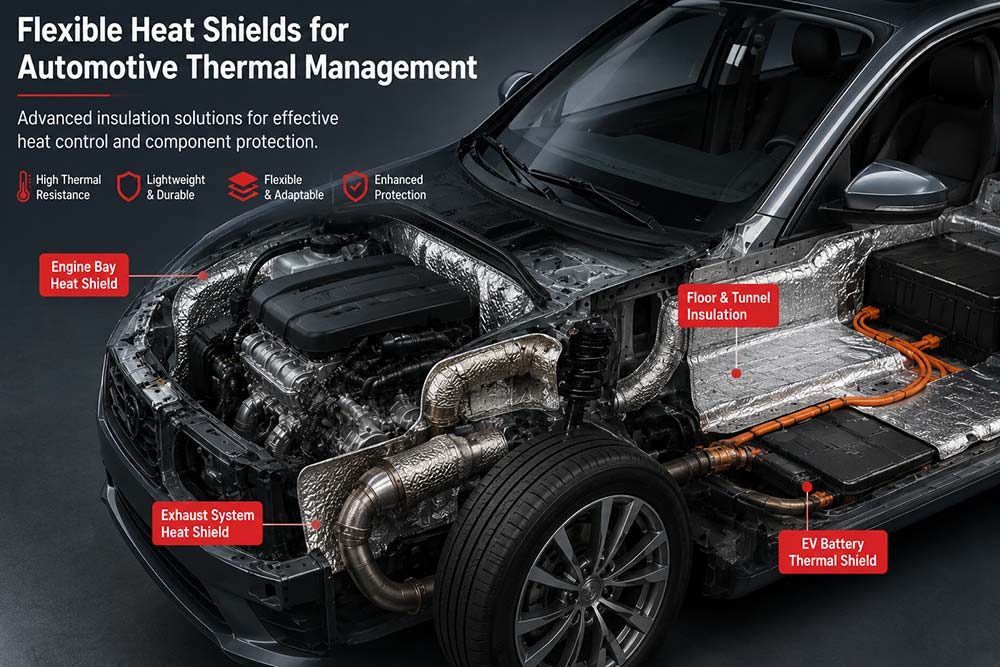
The challenge today extends beyond managing heat. Engineers must balance thermal performance, packaging constraints, weight targets, and production-scale consistency while protecting sensitive components from rising thermal loads.
Flexible Heat Shields help address these challenges by providing targeted thermal protection, design flexibility, and reliable performance in complex vehicle architectures. This article explores their role in improving thermal control, component protection, and long-term reliability across modern automotive applications.
Why Automotive Thermal Management Has Become Critical in Modern Vehicles
Modern vehicles operate in increasingly demanding thermal environments. Higher power density, compact packaging, and advanced vehicle systems are generating more heat than ever before. As a result, effective Automotive Thermal Management has become essential for maintaining vehicle performance, reliability, safety, and long-term operating efficiency.
Rising Heat Loads Across Vehicle Systems
Several industry trends are increasing thermal demands across modern vehicle platforms. Downsized engines, turbochargers, and advanced emission control systems generate higher operating temperatures within limited packaging space. Electrification is adding further complexity, with EV Thermal Management requiring precise temperature control around batteries, motors, and power electronics.
As components become more densely packaged, managing heat transfer between adjacent systems becomes increasingly challenging for automotive engineers.
The Impact of Uncontrolled Heat on Vehicle Performance
Excessive heat can accelerate material degradation, damage wiring and electronic components, and reduce overall system efficiency. Without effective Automotive Insulation and thermal protection, critical vehicle systems can become vulnerable to premature wear, higher maintenance demands, and reduced operational reliability.
Advanced thermal protection technologies help reduce these risks by controlling heat transfer and protecting temperature-sensitive components operating in demanding environments.
As thermal loads continue to increase, manufacturers are investing in Heat Shield Solutions that can deliver consistent performance across passenger vehicles, commercial vehicles, and future mobility platforms.
Understanding Flexible Heat Shields and Their Role
Flexible Heat Shields are engineered to protect temperature-sensitive components from excessive heat while adapting to increasingly complex vehicle architectures. Unlike rigid alternatives, they offer greater installation flexibility, making them valuable across passenger vehicles, commercial vehicles, and EV Thermal Management applications.
Key Characteristics of Flexible Heat Shields
The effectiveness of Flexible Heat Shields comes from their ability to balance thermal performance with design flexibility in demanding automotive environments.
- Flexible Design Adaptability: Conforms to complex geometries and confined installation spaces where rigid shielding solutions may be difficult to integrate.
- Lightweight Construction: Supports vehicle lightweighting initiatives while maintaining effective thermal protection and contributing to improved efficiency.
- High-Temperature Resistance: Helps reduce radiant and conductive heat transfer in areas exposed to elevated operating temperatures.
- Durability in Harsh Conditions: Withstands vibration, moisture, chemicals, road debris, and repeated thermal cycling throughout the vehicle lifecycle.
Applications Across Automotive Systems
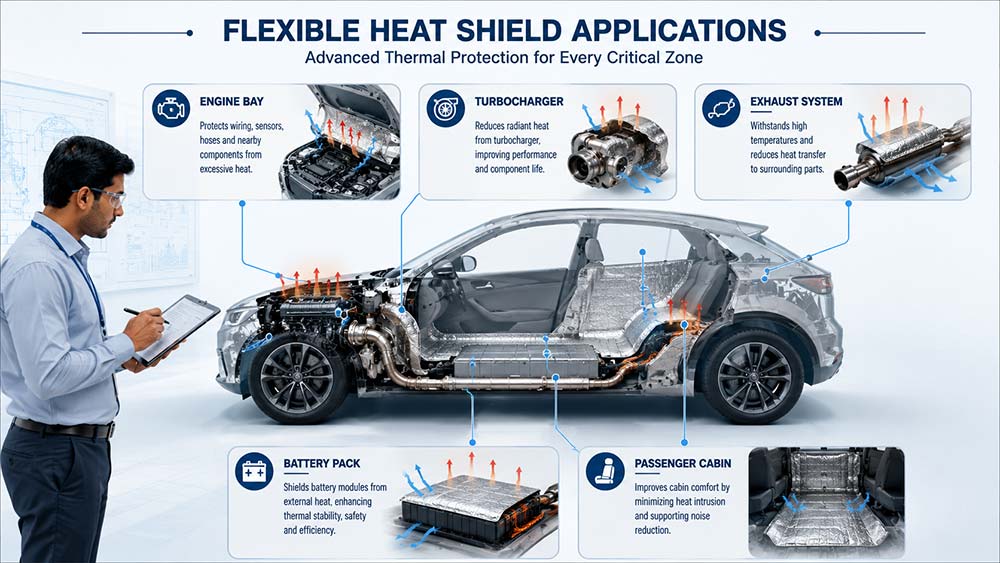
Modern Heat Shield Solutions support multiple thermal protection requirements across vehicle platforms and critical operating zones.
- Exhaust Heat Shield Systems: Protect surrounding components while supporting Underbody Thermal Protection around exhaust manifolds, catalytic converters, and exhaust systems.
- Engine Bay Thermal Control: Controls heat generated by powertrain systems to safeguard critical components, improving reliability and maintaining consistent performance in demanding operating conditions.
- Battery Thermal Protection: Helps maintain safe operating temperatures around battery assemblies and power electronics.
- Turbocharger Heat Management: Reduces heat exposure to nearby components operating close to turbocharger systems.
- Cabin Heat Reduction: Contributes to occupant comfort by limiting heat transfer into passenger compartments.
This versatility makes Flexible Heat Shields an important part of Automotive Insulation systems, helping manufacturers manage thermal risks while supporting performance, reliability, and packaging efficiency.
Automotive Heat Shield Materials Used in Flexible Heat Shields
The effectiveness of Flexible Heat Shields depends largely on the materials used in their construction. Different automotive environments require varying levels of thermal resistance, durability, flexibility, and insulation performance. Selecting the right Automotive Heat Shield Materials is essential for achieving reliable Automotive Thermal Management and long-term component protection.
Selecting Materials for Demanding Thermal Environments
The performance of Flexible Heat Shields depends heavily on material selection. Automotive applications operate under varying thermal conditions, requiring carefully selected material combinations that balance heat resistance, durability, flexibility, and insulation performance for effective Automotive Thermal Management.
- Aluminum Laminates: Lightweight materials that reflect radiant heat effectively while supporting vehicle weight reduction objectives.
- Fiberglass Composites: Provide a balance of thermal insulation, flexibility, and mechanical strength for demanding automotive applications.
- Ceramic Fibre Materials: Suitable for extreme-temperature environments where conventional insulation materials may not deliver sufficient protection.
- Silica Fabrics: Offer excellent thermal stability and flexibility, making them ideal for complex installations and confined spaces.
- Multi-Layer Insulation Structures: Combine different materials to reduce multiple heat transfer mechanisms while improving overall thermal efficiency and long-term performance.
What Materials Are Commonly Used in Flexible Heat Shields?
Flexible Heat Shields commonly use aluminum laminates, fiberglass composites, ceramic fibre materials, silica fabrics, and multi-layer insulation structures. Each material offers specific advantages based on temperature requirements, durability expectations, installation constraints, and overall thermal protection objectives.
At PBM Insulations, material selection is supported by engineering evaluation, application testing, and manufacturing processes designed to deliver consistent thermal performance across OEM production environments.
Benefits of Flexible Heat Shields in Automotive Thermal Management
As vehicle architectures become more compact and thermally demanding, manufacturers require thermal protection solutions that can adapt to complex designs without compromising performance. Flexible Heat Shields provide several advantages over traditional rigid shielding systems in modern Automotive Thermal Management applications.
- Enhanced Thermal Protection: Helps reduce heat transfer to nearby components and maintain safe operating temperatures in critical vehicle systems.
- Improved Component Lifespan: Minimizes thermal stress and material degradation, helping extend the service life of wiring, sensors, electronic modules, and structural components.
- Greater Design Flexibility: Conforms to complex geometries and confined installation areas where rigid solutions may be difficult to integrate.
- Weight Reduction Opportunities: Lightweight materials support vehicle efficiency goals while delivering effective Vehicle Thermal Protection.
- Improved Reliability and Safety: Helps maintain consistent operating temperatures, reducing the risk of overheating and heat-related system failures.
- Support for Electrification Trends: Supports EV Thermal Management and Thermal Insulation for Automotive Applications by protecting batteries, power electronics, and associated systems.

As automotive thermal requirements continue to evolve, Flexible Heat Shields are increasingly preferred for their ability to combine thermal performance, packaging efficiency, and long-term reliability across diverse vehicle applications.
Conclusion
As vehicle architectures become more compact and thermally demanding, effective Automotive Thermal Management is essential for protecting critical components, improving reliability, and supporting long-term vehicle performance across conventional, hybrid, and electric platforms.
Flexible Heat Shields help manufacturers address these challenges through efficient thermal protection, design flexibility, lightweight construction, and durability. Their ability to integrate into complex vehicle systems makes them a valuable part of modern Automotive Insulation Solutions and thermal protection strategies.
For OEMs seeking production-ready thermal protection solutions, PBM Insulations combines 30+ years of manufacturing experience, IATF 16949-certified quality systems, and engineering expertise. Contact PBM to discuss Flexible Heat Shields and customised thermal insulation solutions for your next automotive program.
Ready to Future-Proof Your Product with Insulation That Performs?
At PBM Insulations, we engineer thermal and acoustic solutions that power India’s leading OEMs. Whether you’re building the next electric vehicle, optimizing industrial machinery, or looking to enhance sustainability — we’re here to co-create with precision, trust, and performance.
Let’s turn your insulation challenges into engineered solutions.
📩 Reach out for a custom consultation
🌐 Visit us at: www.pbminsulations.com
📞 Call us: +91-7310777959
🔗 Connect with us: LinkedIn | YouTube | Instagram
Join our network for monthly insights on insulation innovation, EV breakthroughs, and industry trends. Subscribe to PBM Insulation Insights today.
“Crafting Quiet Strength Since 1993” | An IATF, ISO & Ecovadis Certified Company | Your OEM Partner in Thermal & Acoustic Innovation