
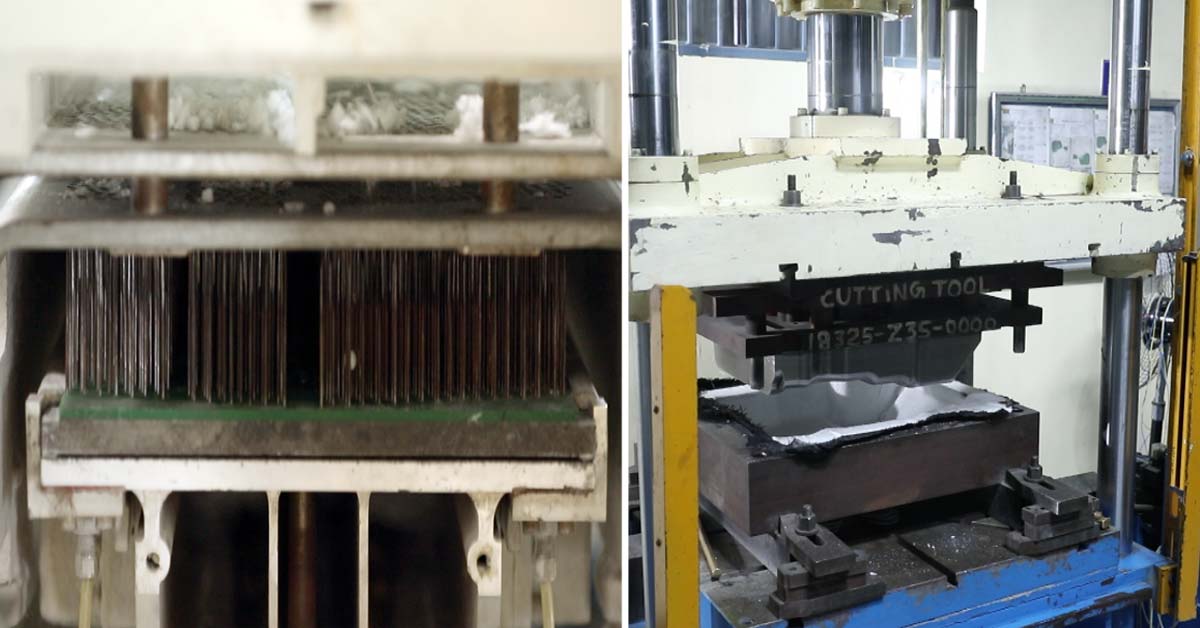
In the silent spaces beneath a car’s hood, or deep inside the armour of defence machines, insulation does more than block heat or sound. It shapes performance, safety, and longevity. At PBM, crafting this unseen hero involves needling and moulding in insulation.
Imagine delicate fibres entangling seamlessly into soft, protective mats, or molten materials pressed into precise forms ready to shield against extreme temperatures. This is where science meets artistry. Needling creates flexible, felt-like layers ideal for complex contours, while moulding sculpts rigid, robust parts that fit perfectly where strength matters most.
In this article, we explore how PBM’s advanced needling and moulding processes transform humble fibres into high-performance insulation. Discover how these methods deliver structural integrity, thermal efficiency, and tailored solutions—empowering OEMs across automotive, EV, and defence industries to build safer, quieter, and more resilient technologies.
Understanding Needling in Insulation Manufacturing
Needling is one of the most important processes in insulation manufacturing. It helps create materials that are strong, flexible, and perfect for thermal and acoustic performance. Let’s understand what needling is, how it works, and why OEMs trust it for their products.
What is Needling?
Needling, also called needle punching, is a mechanical process. It uses barbed needles to pierce and pull fibres repeatedly. This interlocks the fibres tightly, forming a felt-like, nonwoven mat. Unlike woven fabrics, these mats do not have yarns crossing over each other. Instead, they are held together by friction and entanglement.
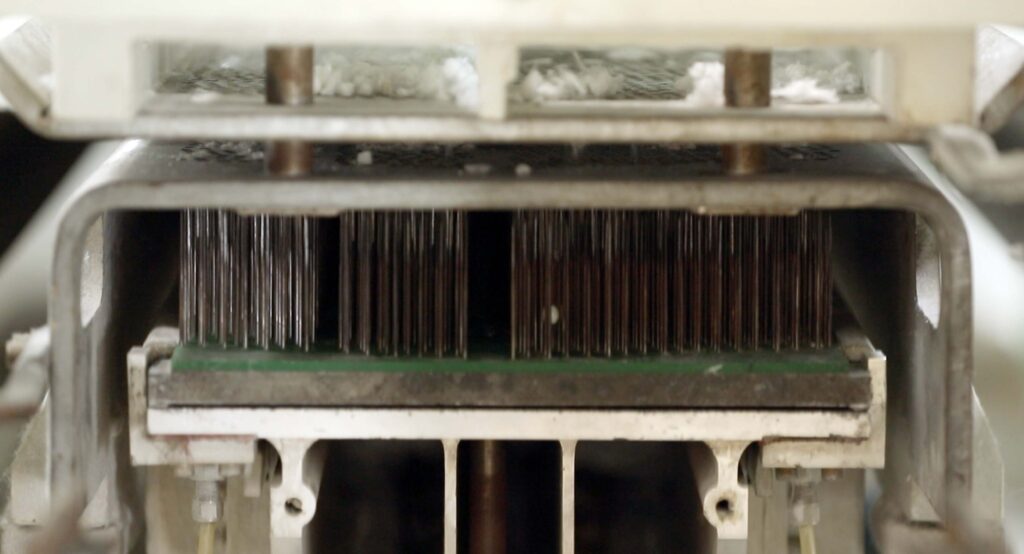
How Does Needling Enhance Insulation Performance?
Needled mats are known as nonwoven insulation materials. Their structure traps air, providing excellent thermal resistance. They also absorb sound and vibrations, making them useful in many industries.
Where is Needled Insulation Used?
At PBM, needled insulation is used in:
- Automotive cabin felts to reduce road noise and improve cabin comfort
- EV battery pads that manage heat and keep batteries protected
- Acoustic insulation felts in HVAC systems, engines, and machinery for noise control
Why Do OEMs Prefer Needled Insulation?
Needled insulation offers key benefits:
- It is flexibleand fits complex shapes.
- It is durable, lasting long under stress and vibration.
- It is adaptable, as different fibres and densities can be used based on the application.
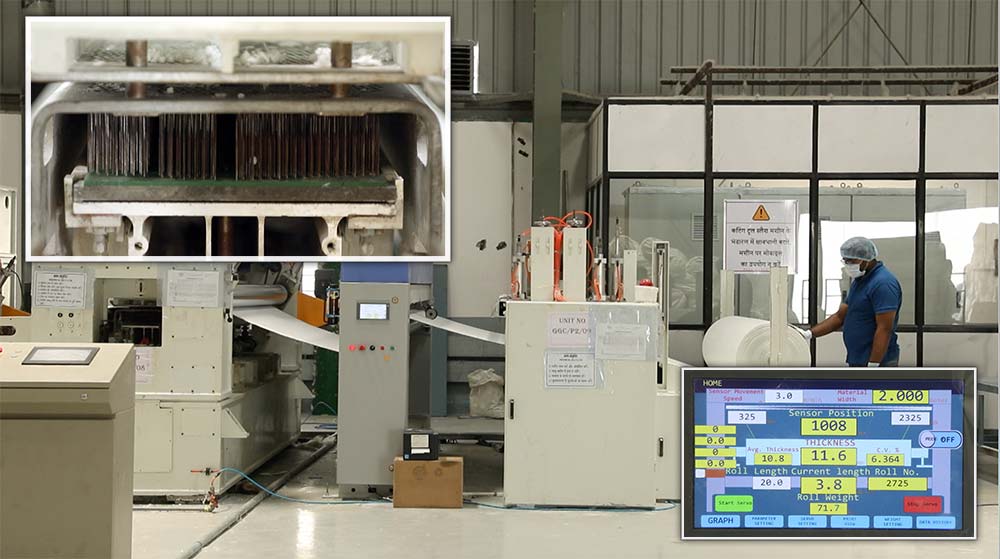
In simple words, needling turns loose fibres into powerful insulation mats that deliver safety, comfort, and performance in every application.
Moulding Techniques for Fibreglass and Advanced Insulation
Moulding is another core process at PBM that gives insulation materials their final shape and strength. While needling creates flexible mats, moulding transforms these and other materials into rigid, high-density parts needed for specific applications. Let’s understand how moulding works and why it is critical in insulation manufacturing.
What is Moulding in Insulation Manufacturing?
Moulding involves shaping materials by pressing or injecting them into a mould cavity. Two key moulding techniques used in insulation manufacturing are:
- Compression moulding involves placing material in a heated mould and pressing it into the desired shape.
- Fibreglass moulding process: Layers of fibreglass are combined with resins and compressed to form strong, lightweight insulation components.
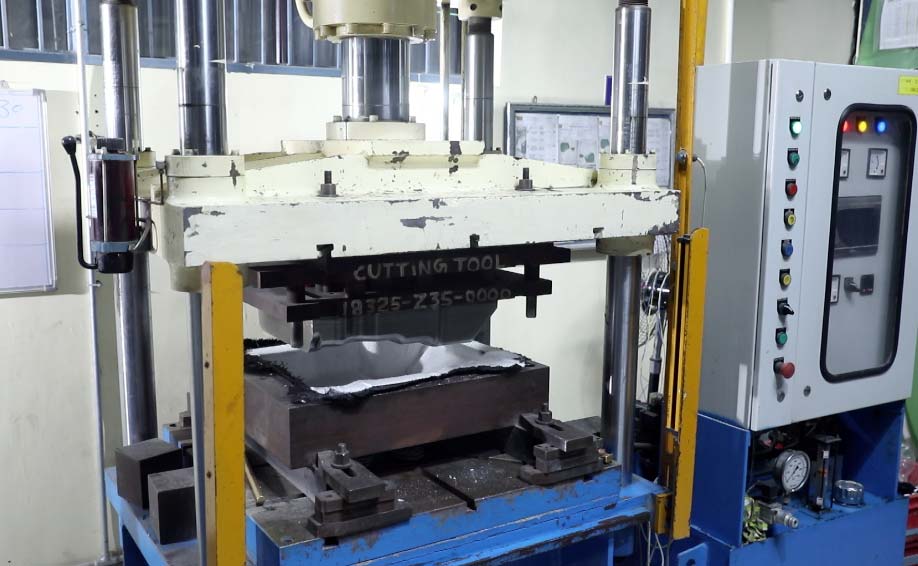
How Does Moulding Enhance Insulation Performance?
Moulding creates structurally precise and high-density insulation parts. This process ensures:
- Consistent thickness and shape
- Strong bonding of fibres and resins
- High mechanical and thermal performance
The recent research on injection moulding trends and sustainability also highlights how these processes continue to evolve for better precision and eco-friendly outcomes.
Applications of Moulded Insulation Products
PBM uses moulding to produce:
- Engine bay mouldings that protect against heat and vibrations
- Structural heat shields that shield critical vehicle parts from high temperatures
- Preformed glass wool parts used in automotive, EV, and industrial insulation systems
Benefits of Moulding for OEM Applications
Moulded insulation parts offer key advantages:
- Dimensional stability: Maintains exact shape under temperature and load
- Mechanical strength: Withstands stress, pressure, and vibrations
- Fitment accuracy: Perfect fit into engine bays, battery packs, or structural housings
In short, moulding transforms raw materials into precise, durable insulation solutions that meet strict OEM standards for performance and safety.
Combining Needling and Moulding for High-Performance Insulation
At PBM, needling and moulding in insulation are not just separate techniques but an integrated approach. This combination creates products with superior flexibility, strength, and thermal performance for critical OEM applications.
Needling and moulding in insulation, when used together, deliver flexible and strong products. One that meets the highest OEM standards.
PBM’s Integrated Manufacturing Approach
PBM uses needling to create nonwoven mats with excellent thermal and acoustic properties. These mats are light, flexible, and easy to work with. However, some applications need parts that are not just flexible but also rigid, with precise shapes and high mechanical strength. This is where moulding comes in.
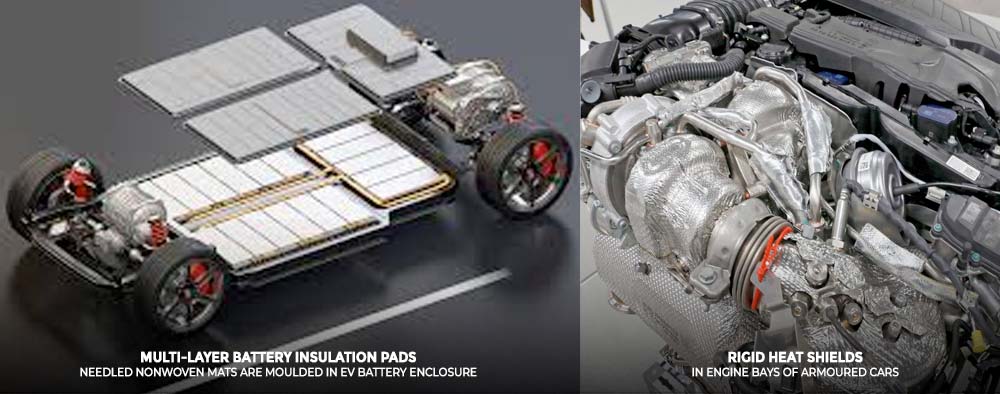
By combining both processes, PBM produces insulation materials that have the softness and thermal performance of needled mats along with the dimensional stability and strength of moulded parts.
The Science Behind Combining Needling and Moulding
When needled mats are moulded, the fibres remain interlocked, and the moulding process adds structure by compressing them into defined shapes. This creates products with:
- Enhanced structural integrity
- Improved thermal insulation due to dense fibre packing
- High temperature resistance suitable for critical environments
This synergy results in insulation that performs under extreme heat, vibration, and mechanical stress without losing shape or function.
Applications of Combined Needling and Moulding
PBM uses this integrated process for:
- Multi-layer battery insulations in EVs, ensuring both thermal protection and compact fitment
- Defence-grade thermal shields that withstand high temperatures and provide durability in rugged conditions
Combining needling and moulding allows PBM to design high-performance OEM insulation solutions that are tailor-made for modern automotive, EV, and defence applications. It is this commitment to precision and innovation that makes PBM a trusted name in thermal insulation manufacturing.
PBM’s Commitment to Quality and Innovation
At PBM, quality is more than a promise—it is part of every fibre we produce. Our focus on innovation and excellence ensures that every insulation solution meets the highest standards of performance and reliability.
Manufacturing Excellence and In-House R&D
PBM’s manufacturing units are equipped with state-of-the-art machines for needling, moulding, lamination, and profile cutting. These advanced facilities are supported by a dedicated in-house R&D lab, where new insulation materials are developed and tested. Using design tools like SolidWorks and thermal simulation software, our engineers create products tailored to each customer’s needs.
Certifications That Assure Quality
PBM is certified with:
- IATF for automotive quality standards
- ISO for quality management systems
- Ecovadis for sustainability and ethical practices
These certifications prove that our processes are consistent, safe, and environment-friendly.
Tailored Solutions for Diverse Applications
Our insulation solutions are trusted by leading OEMs for:
- Automotive insulation manufacturing: Cabin felts, engine bay shields, moulded parts
- EV battery insulation pads: Lightweight, high-temperature resistant aerogels and fibre mats
- Defence insulation applications: Thermal shields and vibration-resistant insulation for mission-critical systems
PBM’s commitment to quality, innovation, and customised manufacturing makes us a trusted partner for OEMs in automotive, EV, defence, and industrial sectors. We ensure every product delivers performance, safety, and long-term value.
Conclusion
Needling and moulding in insulation are two powerful processes. It combines and, create insulation solutions. Unmatched strength, flexibility, and performance.
Needling provides lightweight, thermal, and acoustic benefits, while moulding adds structural precision and durability. At PBM, we integrate these techniques seamlessly to deliver products that meet the strict requirements of automotive, EV, and defence OEMs. Our expertise, advanced manufacturing, and commitment to quality make us a trusted partner for insulation solutions that perform under the toughest conditions.
Explore PBM’s full range of insulation manufacturing capabilities to power your next project with precision and confidence.
Ready to Future-Proof Your Product with Insulation That Performs?
At PBM Insulations, we engineer thermal and acoustic solutions that power India’s leading OEMs. Whether you’re building the next electric vehicle, optimizing industrial machinery, or looking to enhance sustainability — we’re here to co-create with precision, trust, and performance.
Let’s turn your insulation challenges into engineered solutions.
???? Reach out for a custom consultation
???? Visit us at: www.pbminsulations.com
???? Call us: +91-7310777959
???? Connect with us: LinkedIn | YouTube | Instagram
Join our network for monthly insights on insulation innovation, EV breakthroughs, and industry trends. Subscribe to PBM Insulation Insights today.
“Crafting Quiet Strength Since 1993” | An IATF, ISO & Ecovadis Certified Company | Your OEM Partner in Thermal & Acoustic Innovation