
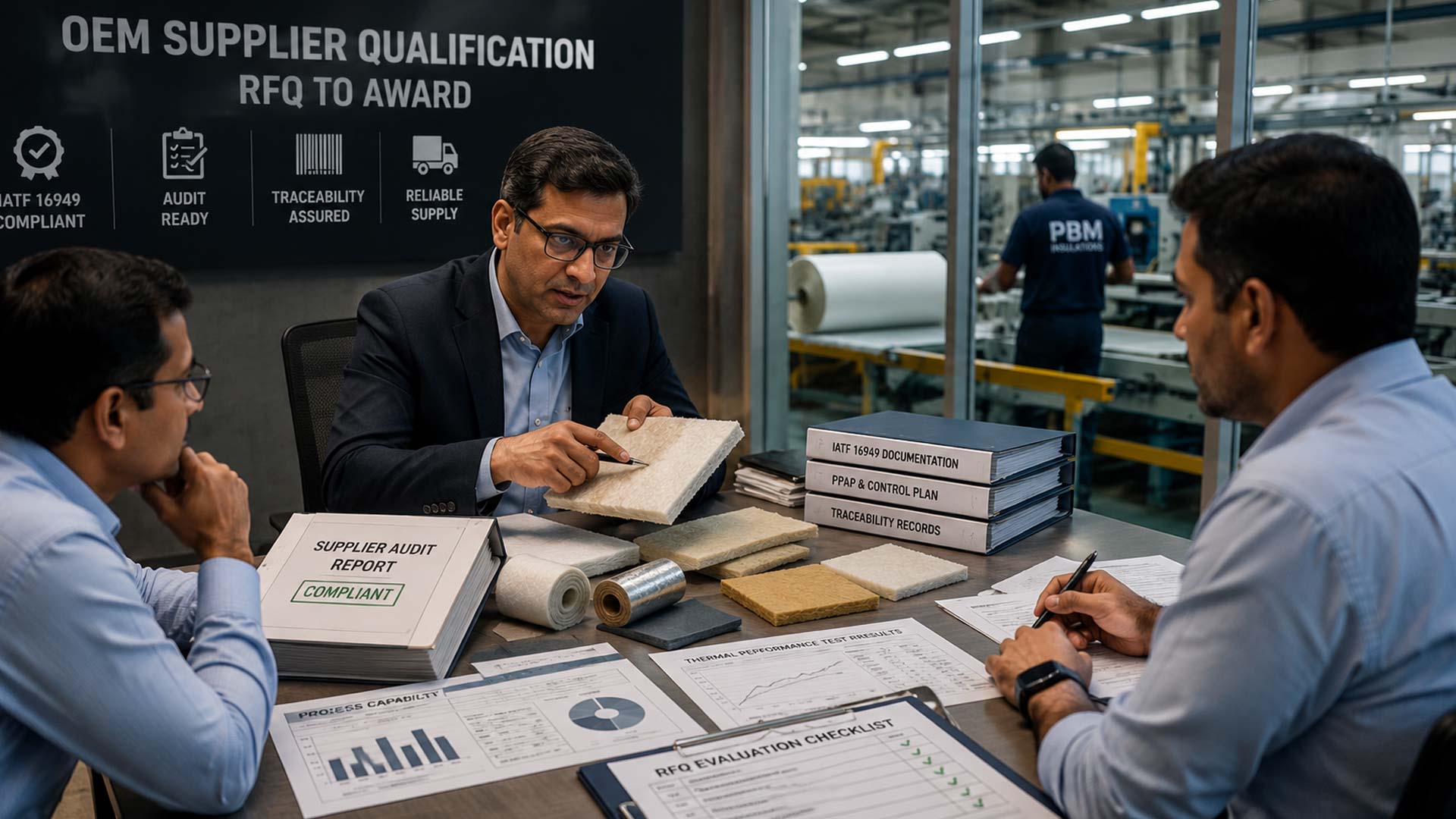
In OEM insulation programs, most suppliers clear the RFQ pricing stage but never reach final award. The reason is rarely commercial. It is qualification. Pricing opens the door. Qualification decides who walks through it. The gap between RFQ shortlist and supplier award is where most insulation vendors quietly drop off.
PBM Insulations has supplied India’s leading automotive OEMs for over three decades. IATF 16949:2016 and ISO 9001:2015 certified, with manufacturing across Aligarh and Vapi and warehousing in Chennai and Pune, the company operates inside the same qualification protocols OEMs apply to every supplier in their program.
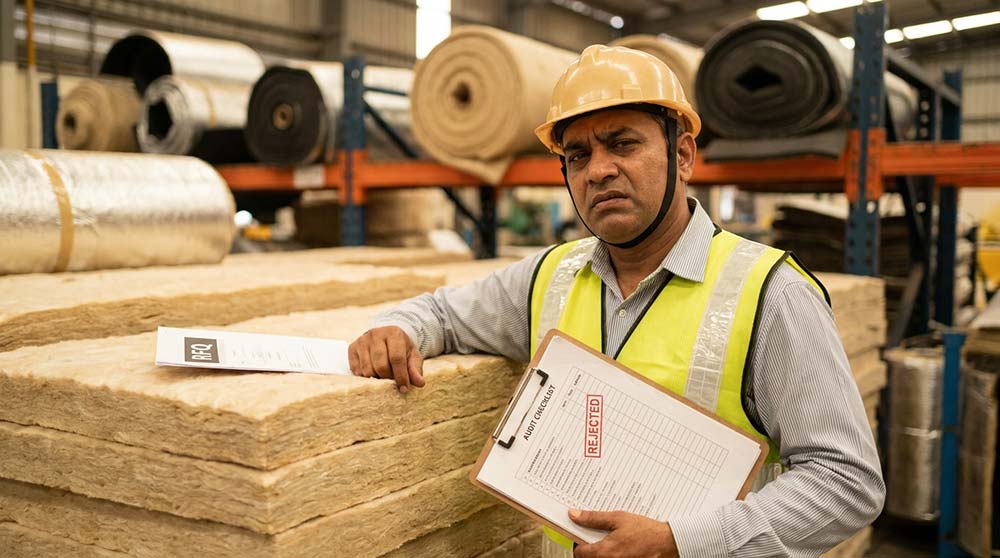
The industry gap is structural. Suppliers treat RFQ submission as the milestone. OEMs treat it as the opening filter. Audit failures, documentation gaps, and capacity mismatches surface long after pricing is accepted. By then, the program timeline does not allow correction.
Insulation supplier qualification is a structured, multi-gate filter. Suppliers that understand what OEMs verify at each gate convert RFQs into awards. Suppliers that do not, fail in silence between shortlist and PO release.
What Insulation Supplier Qualification Means in OEM RFQs
Insulation supplier qualification is a multi-gate evaluation process, not a single approval step. OEMs verify capability across quality, capacity, compliance, and continuity before any award is released.
Beyond Pricing — What OEMs Actually Evaluate
Pricing is the entry filter. It does not determine award. Once a supplier clears commercial review, OEMs evaluate quality management systems, traceability protocols, manufacturing capacity, financial stability, and certification status. Each gate is independent. A failure at any one disqualifies the supplier from final award, regardless of how competitive the pricing was.
Automotive insulation supplier is evaluated not only on pricing, but on process stability, traceability, and long-term production consistency.
In automotive insulation specifically, OEMs verify whether the supplier’s process discipline can hold across thousands of production units, not just sample batches. Material variability, dimensional drift, and lot-to-lot inconsistency are the failure modes that emerge at scale.
Why RFQ Shortlist Does Not Equal Award
Shortlisting confirms commercial viability. Award confirms operational capability. Between the two sit technical evaluation, plant audit, sample validation, and documentation review. Suppliers that prepare only for the RFQ stage are unprepared for the audit gate, which is where most disqualifications happen.
Insulation supplier qualification is what closes the gap between shortlist and award. Suppliers built for it convert. Suppliers built for pricing alone do not.
The OEM RFQ Process and Where Suppliers Drop Off
The OEM RFQ process is a sequence of evaluation stages, each with its own pass criteria. Suppliers do not fail at random. They fail at predictable gates where preparation gaps surface.
Stages of the OEM RFQ Process
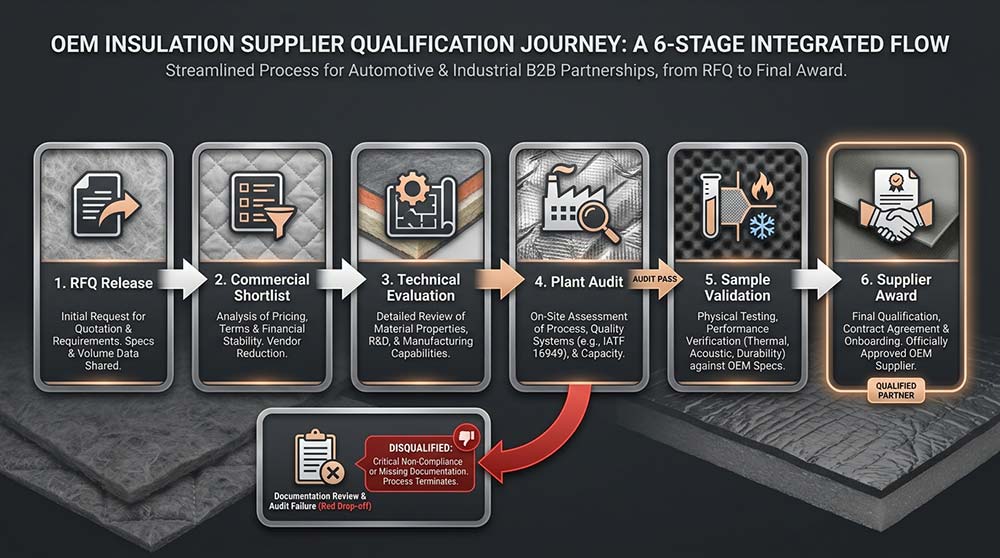
A standard OEM RFQ process moves through six stages: RFQ release, commercial shortlisting, technical evaluation, plant audit, sample validation, and supplier award. Each stage filters suppliers further. By the time award is released, the original supplier pool has typically narrowed to two or three candidates. The filtering is not arbitrary — it is structured around risk reduction across program lifecycle.
The Audit Stage — Where Most Suppliers Fail
Plant audit is where the highest volume of supplier failures occurs. Documentation gaps, process non-conformance, traceability failures, and capacity mismatches surface during physical inspection. What looks acceptable on a quotation sheet often does not hold up to floor-level audit scrutiny.
Audit failure rarely produces a second chance within the same RFQ cycle. The supplier is filtered out, and the program moves forward without them.
What an Audit-Ready Automotive Insulation Supplier Looks Like
Audit readiness is not a checklist exercise. It is a manufacturing discipline that separates shortlisted suppliers from awarded ones across automotive insulation programs.
Manufacturing and Quality System Markers
OEM auditors verify operational markers on the production floor — not in presentation decks. The markers below are what determine whether a supplier holds up under audit pressure:
- Zero-PPM quality record across program lifecycle
- Dual-site manufacturing for supply continuity
- In-house lab validation for thermal and dimensional parameters
- Traceability from raw material receipt to finished goods dispatch
- Process discipline aligned to IATF 16949 protocols
PBM’s Capability Stack for OEM Programs
PBM’s infrastructure is built directly against the markers OEM audit teams verify. The capability stack supports audit readiness across every program:
- Three plants in Aligarh and one in Vapi — 80,000+ sq. ft. total
- 1000 tons per annum glass wool production capacity
- IATF 16949:2016 and ISO 9001:2015 certified systems
- Warehousing in Chennai and Pune for delivery continuity
- Active supply to leading 2-wheeler, 4-wheeler, and commercial vehicle OEMs
Audit readiness is what converts qualification into award. The capability stack is not a marketing claim — it is what determines whether a supplier survives the audit gate inside an OEM program.
What OEM Procurement Teams Verify Before Award
Before any insulation supplier receives a final award, OEM procurement teams run a structured verification checklist. This is the final filter that separates shortlisted suppliers from awarded ones.
- IATF 16949 certification status — OEM programs typically prioritise an IATF 16949 supplier with proven audit discipline and production repeatability.
- Manufacturing capacity and redundancy — Single-site exposure versus multi-facility supply continuity directly affects program risk profile. Supply continuity becomes critical in long-cycle OEM production programs.
- Documentation discipline — PPAP, control plans, FMEA, and traceability records must be available on demand and audit-aligned.
- Lab and validation capability — In-house testing for thermal performance, dimensional stability, LOI, and durability parameters.
- Track record with comparable OEMs — Existing supply to automotive programs of similar scale and specification protects against execution risk.
Verification is the last gate before PO release. Suppliers who clear it consistently are not selected by chance. They are selected because they are built for it.
Conclusion
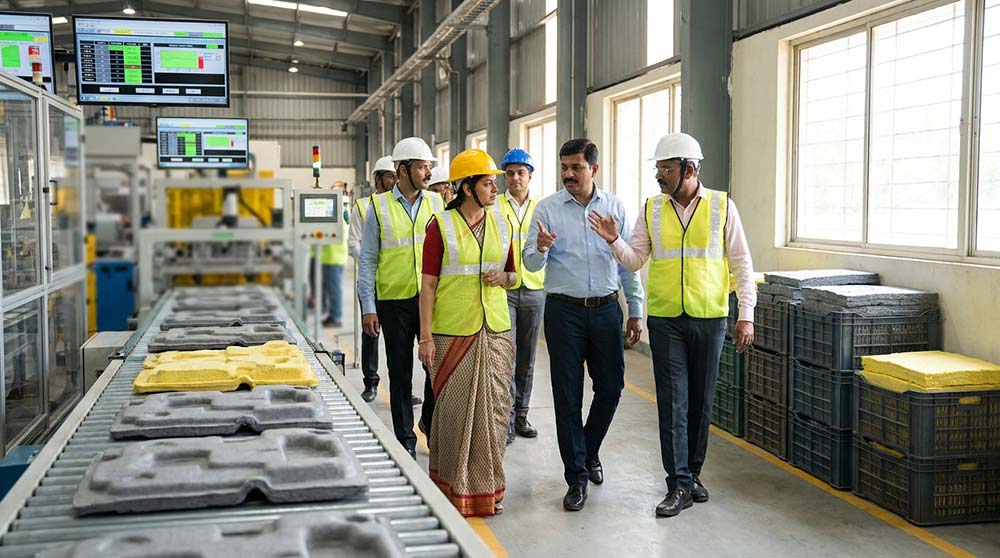
Insulation supplier qualification is where OEM RFQs are won or lost. Pricing opens the door. Certification, audit readiness, manufacturing capacity, and documentation discipline determine which suppliers walk through it. Suppliers that treat qualification as a checklist exercise drop off between shortlist and award. Suppliers that build qualification into operating discipline convert RFQs into long-term programs. PBM has supplied India’s leading automotive OEMs for over three decades through that exact discipline — IATF 16949 systems, dual manufacturing, zero-PPM execution, and audit-ready documentation across every program.
Engage PBM at RFQ stage to qualify an insulation supplier built for OEM audit clearance and award conversion.
Ready to Future-Proof Your Product with Insulation That Performs?
At PBM Insulations, we engineer thermal and acoustic solutions that power India’s leading OEMs. Whether you’re building the next electric vehicle, optimizing industrial machinery, or looking to enhance sustainability — we’re here to co-create with precision, trust, and performance.
Let’s turn your insulation challenges into engineered solutions.
📩 Reach out for a custom consultation
🌐 Visit us at: www.pbminsulations.com
📞 Call us: +91-7310777959
🔗 Connect with us: LinkedIn | YouTube | Instagram
Join our network for monthly insights on insulation innovation, EV breakthroughs, and industry trends. Subscribe to PBM Insulation Insights today.
“Crafting Quiet Strength Since 1993” | An IATF, ISO & Ecovadis Certified Company | Your OEM Partner in Thermal & Acoustic Innovation